
🕐11 min read
In This Article
Spirit Animal Discovery Guide
Find your spirit animal — comprehensive quiz, meanings, meditation techniques, and totem interpretations.
- Why Ritual — Not Willpower — Rebuilds Intuition
- Ritual One: The Owl’s Threshold Vigil
- Ritual Two: The Spider’s Web Meditation
- Ritual Three: The Deer’s Still Path Walk
- What It Means When These Animals Appear in Dreams
- Cultural Tradition Comparison: Owl, Spider, and Deer
- A Six-Minute Meditation Script for Any of the Three
- Journal Questions to Carry Into 2026
Three months ago, a barn owl landed on the fence outside my kitchen window at 4 a.m. and stayed there for eleven minutes — I timed it, half-convinced I was dreaming. I’d been asking, out loud, for weeks, for some sign that my intuition wasn’t broken after a rough year of talking myself out of every gut feeling I had. That owl didn’t answer with words. It answered with stillness, with those impossibly silent wingbeats, with eyes that seemed to say slow down and listen. That single encounter is the reason this article exists. Below are three rituals — built from real animal behavior, genuine cultural traditions, and a decade of my own trial-and-error journaling — designed to sharpen your intuitive senses as you move into 2026. None of them require a single purchased item over $20, and all three can be done in under thirty minutes.
Disclosure: This post contains affiliate links. If you click through and make a purchase, we may earn a small commission at no extra cost to you. Thank you for supporting this site!
11 min read
In This Article
- Why Ritual — Not Willpower — Rebuilds Intuition
- Ritual One: The Owl’s Threshold Vigil
- Ritual Two: The Spider’s Web Meditation
- Ritual Three: The Deer’s Still Path Walk
- What It Means When These Animals Appear in Dreams
- Cultural Tradition Comparison: Owl, Spider, and Deer
- A Six-Minute Meditation Script for Any of the Three
- Journal Questions to Carry Into 2026
Key Takeaways
- Why Ritual — Not Willpower — Rebuilds Intuition
- Ritual One: The Owl’s Threshold Vigil
- Ritual Two: The Spider’s Web Meditation
- Ritual Three: The Deer’s Still Path Walk
Why Ritual — Not Willpower — Rebuilds Intuition
Intuition isn’t a personality trait you either have or lack. Neuroscientist Antonio Damasio’s somatic marker hypothesis, published through his 1994 book Descartes’ Error, argues that gut feelings are actually the body processing pattern recognition faster than conscious thought can catch up. Ritual works because it slows that gap down long enough for you to notice it. When you repeat a specific gesture — lighting a candle, walking the same path, sitting with the same animal image — at the same threshold hour night after night, you’re training your nervous system to associate stillness with signal.

Across cultures, the animals chosen for intuition work are rarely random. The Celtic peoples associated owls with the otherworld and the liminal hours between day and night, according to folklorist Katharine Briggs’ An Encyclopedia of Fairies (1976). In Hindu tradition, the owl serves as the vahana, or vehicle, of Lakshmi, goddess of prosperity and discernment — meaning the owl doesn’t just see in darkness, it sees clearly what others miss. These aren’t coincidental overlaps. Nocturnal, web-building, and quietly perceptive animals recur in ritual practice worldwide because their actual biology models the exact skill we’re trying to build: heightened perception in low-information conditions.
The three rituals below use owl, spider, and deer as intuitive teachers. Each pairs one verified behavioral fact about the animal with one ritual action, so you’re not just visualizing symbolism — you’re studying it.
Each pairs one verified behavioral fact about the animal with one ritual action, so you’re not just visualizing symbolism — you’re studying it.
Ritual One: The Owl’s Threshold Vigil
Owls hear in a frequency range roughly matching human speech, but with far greater precision — the Great Horned Owl, one of the most widely distributed owl species in North America, can pinpoint a sound source within one degree of accuracy according to research summarized by the Cornell Lab of Ornithology’s Owl Research Institute data. Its facial disc feathers funnel sound the way a satellite dish does, and its ears sit at slightly asymmetrical heights on its skull, which lets it triangulate location in three dimensions. This is an animal built entirely around listening. That’s the lesson this ritual borrows.
Perform the Threshold Vigil at dusk or just before dawn — the two hours owls call “crepuscular,” meaning the transitional light in which most species hunt. You’ll need a doorway (literal threshold matters here), a small unlit candle, and roughly fifteen minutes of uninterrupted quiet.
- Stand in a doorway of your home — not fully inside, not fully outside. This liminal position mirrors the owl’s dawn/dusk hunting window and, per Celtic tradition, marks a place where “the veil is thin.”
- Light the candle and set it on the floor at the threshold’s edge.
- Close your eyes for four full minutes. Resist the urge to check the time — count breaths instead, aiming for roughly sixteen slow breaths.
- Ask one specific question aloud — not “what should I do with my life” but something concrete, like “is this decision safe to make this month.”
- Open your eyes, blow out the candle, and write down the very first image, word, or physical sensation that surfaced. Don’t edit it.
In Ojibwe tradition, some communities regard the owl’s call as a warning to be heeded with care rather than fear — a reminder to pay closer attention rather than to panic, as detailed in ethnographic collections by folklorist Basil Johnston in Ojibway Heritage (1976). Not every Indigenous nation shares this view; the Pawnee, by contrast, historically associated owls with protective nighttime guardianship. I mention both because lumping “Native American beliefs” into one monolith is a real disservice — these are distinct nations with distinct cosmologies, and the respectful practice is to note which one you’re referencing.
Want to decode more?
Free weekly — no spam, unsubscribe anytime.
Ritual Two: The Spider’s Web Meditation
An orb-weaver spider rebuilds a substantial portion of her web nearly every twenty-four hours, consuming the old silk for protein before spinning fresh strands at dusk — a behavior documented extensively in arachnologist Catherine Craig’s research on silk economics, published in her 2003 book Spiderwebs and Silk. Spider silk, gram for gram, has a tensile strength comparable to high-grade steel while remaining far more elastic, which is why DARPA-funded research (Utah State University’s Randy Lewis, spider silk genetics program, ongoing since the early 2000s) has spent two decades trying to synthesize it artificially. The spider isn’t fragile. She’s precise, and she rebuilds constantly without sentimentality about yesterday’s work.

This ritual is about releasing an intuitive hit you talked yourself out of — the sense you had and dismissed. You’ll need paper, a lighter or match, and a fireproof dish.
- Write down one intuitive nudge from the past month that you ignored, in one sentence.
- Below it, write what actually happened when you ignored it.
- Sit with both lines for three minutes without judging yourself for the miss.
- Burn the paper safely in the dish, and as it curls, say: “I rebuild the web tonight.”
- Sweep the ash outside, symbolically clearing the strand that no longer serves.
In West African Akan tradition, the spider Anansi is a trickster-teacher whose stories, carried into the diaspora through Caribbean and American oral traditions, use cleverness and pattern-recognition as survival tools rather than deceit for its own sake. In Diné (Navajo) cosmology, Spider Woman — Na’ashjéii Asdzą́ą́ — is credited in oral tradition with teaching humans the art of weaving itself, a role documented by anthropologist Gladys Reichard in Navajo Religion (1950). Both traditions treat the spider not as something to fear but as proof that patient, repeated construction — web after web, story after story — is its own form of wisdom.
Sit with both lines for three minutes without judging yourself for the miss.
Ritual Three: The Deer’s Still Path Walk
White-tailed deer have a resting heart rate around 40 to 60 beats per minute, but it can spike past 200 bpm within seconds of detecting a threat — a stress response documented in wildlife physiology studies compiled by the National Deer Association. Their peripheral vision spans close to 310 degrees, nearly a full circle, letting them detect motion without turning their heads. What’s remarkable is how quickly they return to baseline once the threat passes; deer don’t stay flooded with adrenaline the way humans ruminate on stress for hours. They startle, assess, and settle. That’s the entire ritual, in animal form.
This walking meditation works best outdoors, ideally at forest’s edge or a park tree line where deer naturally forage — dawn and dusk again, matching their most active hours. No props needed beyond your own footsteps.
- Walk at half your normal pace for the first five minutes, paying attention to where your feet land.
- Notice the first moment your mind reacts to something — a sound, a movement, a worry — and instead of suppressing it, let it spike and then consciously exhale it out within ten seconds, the way a startled deer settles.
- Continue walking, tracking how many times this happens over roughly fifteen minutes.
- End by standing still for one minute, eyes open, simply receiving whatever is in front of you without labeling it.
- Which of the three animals did I resist the most, and what does that resistance tell me?
- Where in my life am I currently “fleeing” like a startled deer instead of assessing and settling?
- What web have I been rebuilding out of habit rather than genuine need?
- If an owl landed near me tonight and stayed exactly eleven minutes, what would I need to hear in that time?
- What’s one intuitive hit from this past year I now recognize I was right about?
At Nara Park in Japan, over 1,000 sika deer roam freely around Kasuga Taisha shrine, regarded since at least the 8th century as sacred messengers of the Shinto deity Takemikazuchi, according to shrine records maintained by the Kasuga Taisha administration. In Celtic mythology, the stag is bound to Cernunnos, the horned god of the wild hunt and seasonal cycles, a figure appearing on the Gundestrup Cauldron (circa 1st century BCE, now housed in the National Museum of Denmark). In several Cherokee and Muscogee oral traditions, the “Deer Woman” figure appears as a guardian who tests the sincerity and respect of those who encounter her. Different continents, different eras — the same instinct to treat the deer’s alert stillness as a moral lesson, not just a survival tactic.
What It Means When These Animals Appear in Dreams
Dream content research from Harvard Medical School’s sleep and dream lab (led by G. William Domhoff’s ongoing content-analysis work since the 1990s) suggests animal dreams often correlate with waking anxiety about vulnerability or unresolved decisions, rather than literal prophecy. That doesn’t make the symbolism meaningless — it makes it worth reading carefully rather than superstitiously.
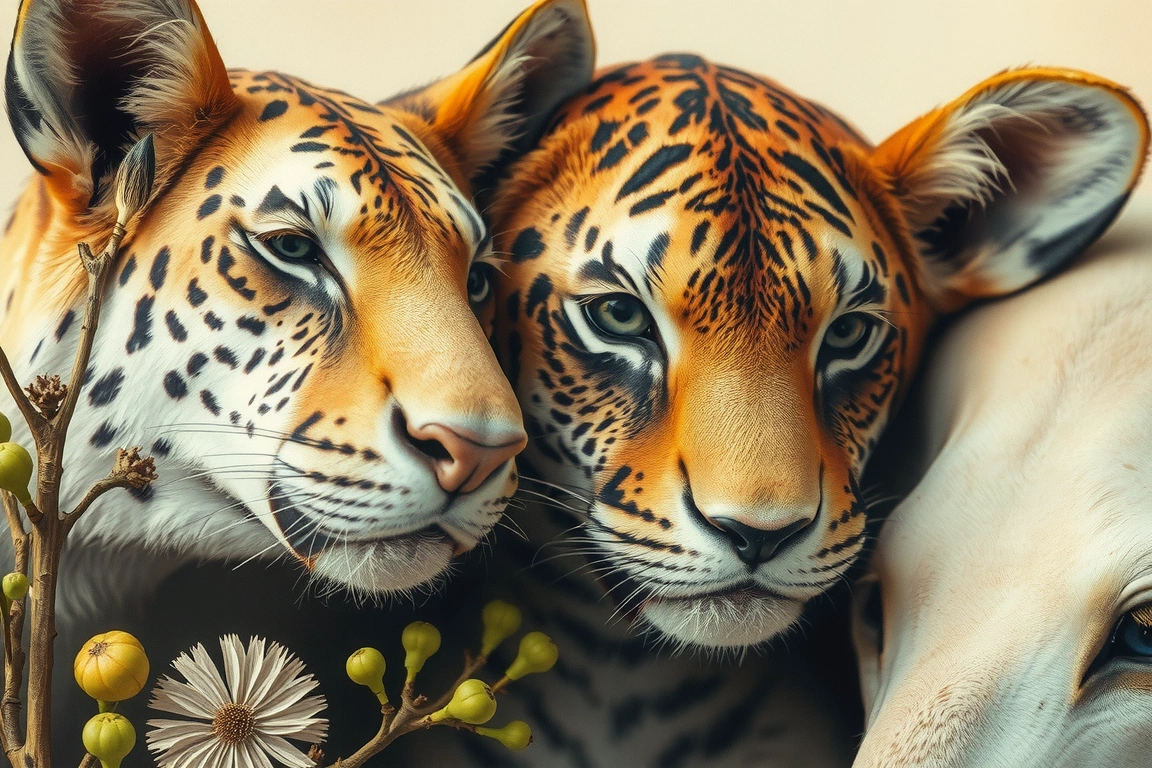
An owl in a dream, especially one that speaks or stares directly at you, often surfaces when you’re avoiding a truth you already sense — the dreaming mind, unlike the waking one, can’t look away as easily. A spider dream involving webs (rather than the spider biting or chasing you) tends to appear during periods of active creative or relational construction; a spider chasing you, by contrast, frequently points to feeling overwhelmed by obligations you didn’t fully choose. Deer dreams that involve stillness or eye contact often arrive when you’re being asked to soften your defenses around one specific person or decision, while a fleeing deer can mirror your own avoidance patterns.
Write dreams down within the first three minutes of waking — dream recall research from the University of Montreal’s Tore Nielsen shows recall accuracy drops by more than 50% within just ten minutes of waking. A five-dollar notebook by your bed will do more for your intuitive practice than any app.
A five-dollar notebook by your bed will do more for your intuitive practice than any app.
Cultural Tradition Comparison: Owl, Spider, and Deer
| Animal | Celtic | Native/Indigenous (specific nation) | Hindu / South Asian | Japanese Shinto | West African |
|---|---|---|---|---|---|
| Owl | Otherworld messenger, thin-veil symbol | Pawnee — protective night guardian; Ojibwe — call as caution | Vahana of Lakshmi, symbol of discernment | Associated with forest spirits (yōkai lore, regional) | Mixed; some Yoruba traditions link owls to witchcraft caution |
| Spider | Rare in core myth; later folk association with weaving fate | Diné — Spider Woman, teacher of weaving | Web as maya, illusion of material world | Jorōgumo — shapeshifting spider spirit in folklore | Akan — Anansi, trickster and storykeeper |
| Deer | Stag bound to Cernunnos, wild hunt | Cherokee/Muscogee — Deer Woman, moral guardian | Associated with Vayu and forest hermitage life | Sacred messenger at Kasuga Taisha, Nara | Less central; regional variation by nation |
Notice what this table doesn’t say: it doesn’t claim one universal “spirit animal meaning.” It shows specific nations and traditions holding specific, sometimes contradictory views of the same creature. That’s the respectful way to use cross-cultural symbolism — as a chorus of distinct voices, not a single flattened myth.
A Six-Minute Meditation Script for Any of the Three
Use this after completing whichever ritual called to you tonight. Read it slowly, or record yourself reading it and play it back.

“Close your eyes. Picture the animal — owl, spider, or deer — not as a costume or a mascot, but as it actually exists: feathered or eight-legged or hoofed, breathing, alert, indifferent to your projections. Let it simply be alive in your mind for thirty seconds without meaning anything yet. Now ask it one honest question. Not the question you think sounds spiritual — the real one, the one you’ve been avoiding. Sit in the silence after asking for a full minute. If nothing comes, that’s data too; some nights the answer is ‘not yet.’ Open your eyes when you’re ready, and write down the very first sentence in your mind, even if it seems unrelated.”
Journal Questions to Carry Into 2026
Keep these in the same notebook you’re using for dream recall — the cross-reference between waking journal entries and dream entries is where the real pattern recognition happens over months, not single nights.
Start small: pick one ritual, not all three, and commit to it for seven consecutive dusk-or-dawn sessions before January 2026 — consistency matters more than variety here. Keep a five-dollar notebook within arm’s reach of your bed for immediate dream and dawn recall, since accuracy drops fast after waking. And if an owl, spider, or deer crosses your actual path during this window, treat it as data worth recording, not proof of anything — let the pattern build across weeks rather than reading a single encounter as destiny.
Do I need to actually see the animal in nature for the ritual to work?
No. These rituals use the animal’s real behavior as a teaching model, not as a literal prerequisite. Many practitioners never encounter a wild owl but still complete the Threshold Vigil using imagery, sound recordings, or simple visualization with strong results. That said, if you do have wild owls, deer, or spiders near your home, incorporating an actual observation session beforehand deepens the practice considerably.
Is it cultural appropriation to reference Native American traditions in a personal ritual?
It becomes appropriation when specific tribal practices, sacred objects, or closed ceremonies are used without attribution or context, often stripped of the nation that originated them. This article names specific nations — Pawnee, Ojibwe, Diné, Cherokee, Muscogee — rather than a generalized “Native American belief,” and treats each as a distinct source rather than interchangeable folklore. The respectful approach is always to credit the specific culture, avoid closed ceremonial elements, and treat the symbolism as one perspective among several rather than the definitive one.
How do I tell a real intuitive signal from ordinary coincidence?
Track frequency and context rather than trusting a single event. One owl sighting is likely biology — owls are simply active at dusk. Three unrelated intuitive nudges pointing toward the same decision within a short window, especially ones you can verify afterward, are worth taking seriously. Keeping a dated journal, as recommended above, is the single most reliable way to separate genuine pattern from wishful pattern-matching over time.
Can I combine these rituals with tarot or Crystals practice?
Yes, and many practitioners find they pair naturally. Drawing a single tarot card immediately after the Owl’s Threshold Vigil, for instance, can add a second layer of reflection to whatever image or word surfaced. If you’re new to combining animal ritual with tarot, our sister site witchcraftforbeginners has a beginner-friendly tarot pairing guide worth reading alongside this practice.
)?$/gm,"$1")],{type:"text/javascript"}))}catch(e){d="data:text/javascript;base64,"+btoa(t.replace(/^(?:)?$/gm,"$1"))}return d}