
🕐6 min read
In This Article
Spirit Animal Discovery Guide
Find your spirit animal — comprehensive quiz, meanings, meditation techniques, and totem interpretations.
Disclosure: This post contains affiliate links. If you click through and make a purchase, we may earn a small commission at no extra cost to you. Thank you for supporting this site!
Imagine this: you’re walking home under a crescent moon, and a black cat slips across your path. Your stomach tightens—a reflex born from centuries of whispered warnings. Yet in ancient Egypt, that same creature was a living amulet, its image carved into tombs to guard the dead. In Japan, the black maneki-neko beckons prosperity, not misfortune. The superstition that black cats bring bad luck is only one thread in a tangled web of animal symbolism that has more to do with human fear than with the creatures themselves. From the hoot of an owl to the skitter of a spider, our ancestors wove stories that still shape how we see the natural world—stories that often obscure deeper, more beautiful truths. This article traces the origins of five common animal superstitions in Western culture, then cracks them open to reveal the spiritual wisdom these beings actually carry. You’ll encounter Celtic reverence, Native American teachings, Hindu symbolism, and Egyptian devotion, all grounded in the real behaviors of the animals themselves. By the end, you’ll know how to meet a black cat, an owl, a spider, a crow, or a snake not with old dread, but with wonder.
Black Cats: From Sacred to Scapegoated
In 1233, Pope Gregory IX issued the papal bull Vox in Rama, explicitly linking black cats to Satan and declaring them incarnations of demons. That single document—less than 1,500 Latin words—lit a persecution that would last centuries. Before that decree, black cats were cherished in many European homes as protectors of grain stores and companions to wise women. The shift was not organic; it was engineered by religious authorities who needed a tangible enemy. By the 16th century, thousands of cats were burned alive alongside accused witches, a practice that may have inadvertently worsened the Black Death by reducing the cat population that controlled rats.
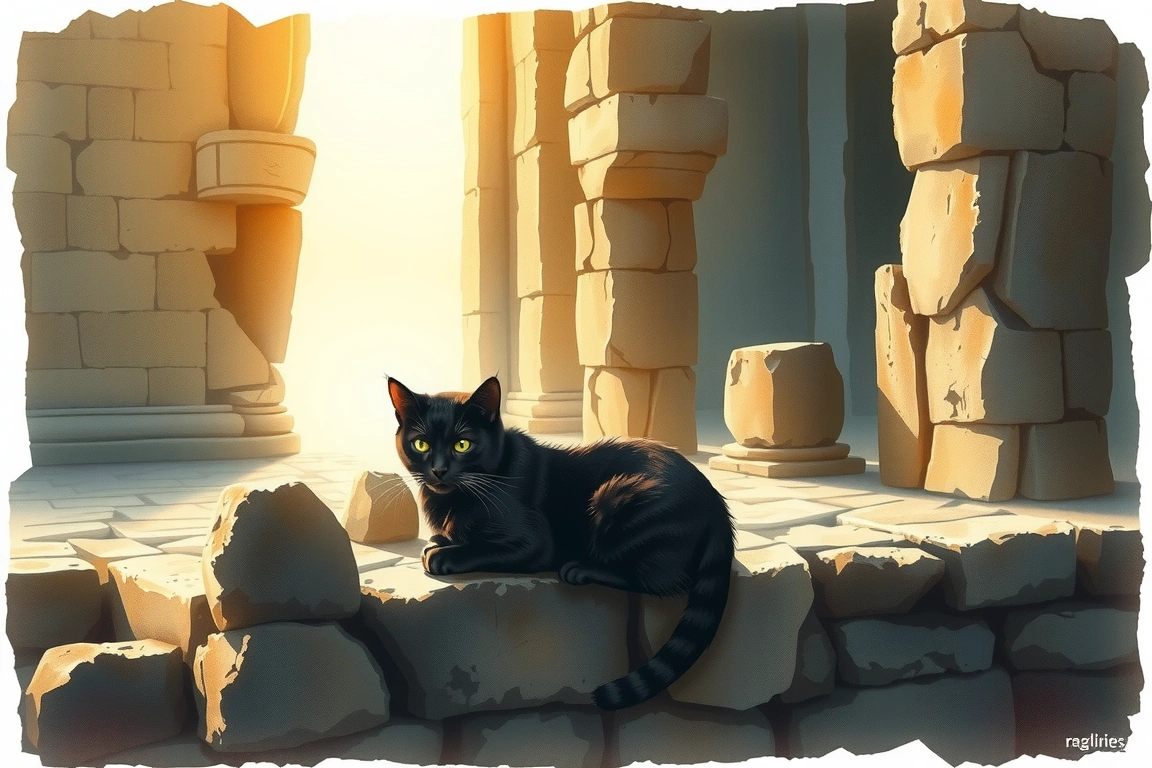
But look east, and the story flips. In ancient Egypt, around 2000 BCE, the goddess Bastet—depicted as a lioness or a woman with a cat’s head—was worshipped in the city of Bubastis. Black cats were considered her earthly representatives; killing one was a crime punishable by death. In Japan, during the Edo period (1603–1868), the black maneki-neko (beckoning cat) became a talisman for warding off evil and attracting customers. Today, according to the RSPCA, black cats make up roughly 40% of cats in UK shelters but account for only 25% of adoptions—a disparity linked directly to lingering superstition. Spiritually, a black cat crossing your path is not a warning but an invitation to step into the unknown with trust. Its black fur absorbs all light, symbolizing the capacity to hold shadow without being consumed by it. Next time you see one, pause and breathe: this creature is a guardian of thresholds, not a bringer of doom.
Owls: Wisdom’s Winged Guardians, Not Death’s Messengers
Of the approximately 250 owl species worldwide, only a handful have earned a reputation as omens of death—yet that handful has cast a long shadow. In ancient Greece, around 500 BCE, the little owl (Athene noctua) perched on the shoulder of Athena, goddess of wisdom, and was revered as a symbol of foresight. Coins from Athens bore its image. So how did the owl become a death omen in Western folklore? The shift likely began with the Roman poet Ovid, who wrote that the screech of an owl foretold doom, and was amplified by medieval bestiaries that called the owl a “bird of the night” and a companion to witches.
Native American traditions offer a more nuanced view. The Hopi people see the burrowing owl as a guardian of the underworld, a guide for souls—not a threat, but a helper. In Hindu mythology, the owl is the vahana (vehicle) of Lakshmi, goddess of wealth and prosperity. During Diwali, the festival of lights that falls in October or November, seeing an owl is considered auspicious, a sign that Lakshmi is near. Behaviorally, owls are master hunters: the great horned owl can rotate its head 270 degrees and hear prey moving under snow from 30 meters away. Their silent flight—achieved through specialized feather edges that reduce turbulence—is not eerie but efficient. If an owl crosses your path, ask yourself: what wisdom am I refusing to see in the dark? This bird does not bring death; it brings the kind of clarity that only comes when you stop pretending the night isn’t there.
Spiders: Weavers of Fate, Not Fiends
There are roughly 50,000 known spider species, and only about 25 of those are capable of causing serious harm to humans—a 0.05% threat ratio. Yet the common reaction to a spider is fear, rooted in medieval European associations with darkness, poison, and the devil’s web. The word “spider” itself comes from Old English spinnan, “to spin,” a neutral craft. But by the 14th century, spiders were linked to witchcraft—their webs seen as traps for souls, their eight legs as a symbol of the eight sabbats. This is a far cry from the reverence they command elsewhere.
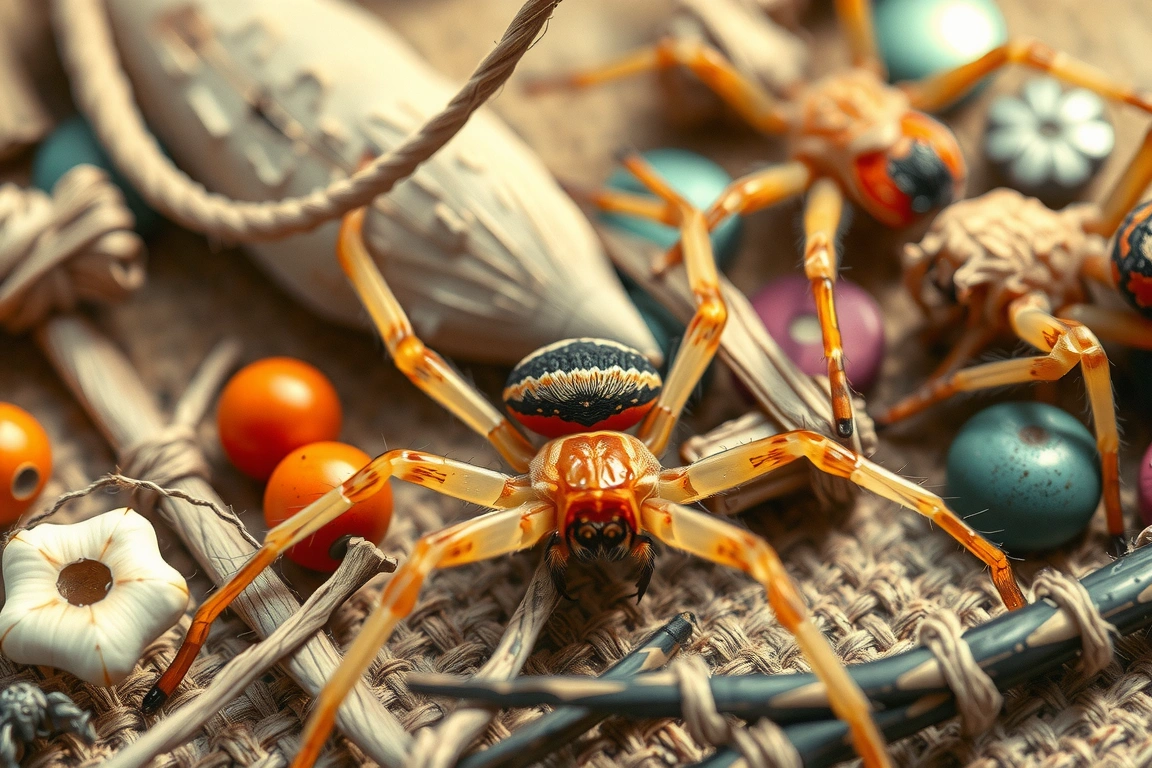
In West African folklore, the trickster spider Anansi appears in stories dating back to at least the 16th century, a clever hero who outwits larger animals and brings wisdom to humanity. The Ashanti people of Ghana tell of Anansi’s web reaching up to the sky god Nyame to retrieve stories for the world. In many Native American traditions, Spider Grandmother is a creator figure who weaves the fabric of existence. The Hopi people tell of a spider woman who taught humans to weave and protected them from harm. Behaviorally, spiders are master engineers: a single orb-weaver can produce up to seven different types of silk, each with a specific tensile strength and elasticity. The golden silk spider’s web is so strong that it has been used in fishing nets in the South Pacific. To encounter a spider is to be reminded that you are a weaver of your own fate. Its web is not a trap but a map of connections. Next time you see one, instead of reaching for a shoe, consider lighting a candle and asking: what am I weaving right now that I cannot yet see?
Crows and Ravens: Tricksters and Teachers
No bird has been more misunderstood than the corvid. In Western culture, a gathering of crows is called a “murder”—a term that first appeared in a 15th-century book of hawking and hunting, The book of Saint Albans, where it was likely meant as poetic fancy, not literal threat. That single word has colored centuries of perception. Meanwhile, scientific studies reveal that crows possess intelligence comparable to a 7-year-old human child. They can remember human faces for up to five years, pass that knowledge to their offspring, and use tools with deliberate planning—even bending wires to retrieve food, as documented in a 2002 study by Dr. Alex Taylor at the University of Auckland.
In Norse mythology, Odin’s two ravens, Huginn (Thought) and Muninn (Memory), flew across the world each day and reported back to him—a tradition recorded in the 13th-century Poetic Edda. In Celtic tradition, the Morrigan, a goddess of war and fate, often appeared as a crow or raven, not as a harbinger of death but as a witness to the cycle of life and death, a psychopomp guiding souls. In Hindu tradition, crows are associated with ancestors; during the Shraddha ceremonies, offerings of rice balls are made to crows as a way to honor the dead. If a crow appears at your window, it is not a threat but a call to pay attention to memory and lineage. Ask yourself: what message from my ancestors am I ignoring? The crow’s black feathers are not a sign of mourning but a mirror reflecting the unseen.
Snakes: Shedding the Skin of Deception
Of the approximately 3,000 snake species worldwide, only about 200 are venomous enough to pose a real threat to humans—roughly 6.7%. Yet the snake is perhaps the most demonized animal in Western symbolism, largely due to the Garden of Eden story, where a serpent tempts Eve. That single narrative, codified in the 4th century CE Latin Vulgate, has shaped millennia of fear.
You Might Also Like

Decode the Message
What does your spirit animal carry? Animal symbolism across world cultures, mythology, and spiritual traditions — weekly.
No spam. Unsubscribe anytime.
