
🕐13 min read
In This Article
Spirit Animal Discovery Guide
Find your spirit animal — comprehensive quiz, meanings, meditation techniques, and totem interpretations.
- The Architecture of the 78 Cards: Major Arcana, Minor Arcana, and the Four Suits
- The Major Arcana (22 Cards): The Fool’s Journey Through the Elements
- Wands (Fire): Creativity, Passion, and the Will to Act
- Cups (Water): Emotions, Relationships, and the Inner World
- Swords (Air): Intellect, Challenges, and the Power of the Mind
- Pentacles (Earth): Material World, Work, and Physical Abundance
Have you ever shuffled a tarot deck and felt a quiet hum of possibility beneath your fingertips, only to wonder what each of those 78 cards is actually trying to tell you? I remember my first deck—a well-worn Rider-Waite-Smith that smelled faintly of old bookshops—and the mix of excitement and overwhelm as I laid out the cards. The tarot is not a random collection of images; it is a carefully structured system, a symbolic language that maps the human experience through four suits and the archetypal journey of the Major Arcana. Each card belongs to a specific element—Fire, Water, Air, or Earth—and understanding these elemental roots transforms a vague guess into a grounded, intuitive reading. This guide walks through every card by suit and element, not as a dry reference, but as a living map you can return to again and again. Whether you are new to the cards or looking to deepen your practice, knowing the elemental bones of the deck will change how you read.
The Architecture of the 78 Cards: Major Arcana, Minor Arcana, and the Four Suits
A tarot deck contains 78 cards divided into two distinct families: the 22 Major Arcana and the 56 Minor Arcana. The Major Arcana—cards like The Fool, The High Priestess, and The World—represent life’s big themes, soul lessons, and archetypal forces that shape our path. These cards carry a heavier energy; when they appear in a reading, they often signal a turning point or a spiritual assignment you cannot sidestep. The Minor Arcana, by contrast, deals with the daily rhythms of life: how you spend your time, who you love, what you worry about, and how you earn your living. It is divided into four suits—Wands, Cups, Swords, and Pentacles—each linked to an element and a domain of experience.
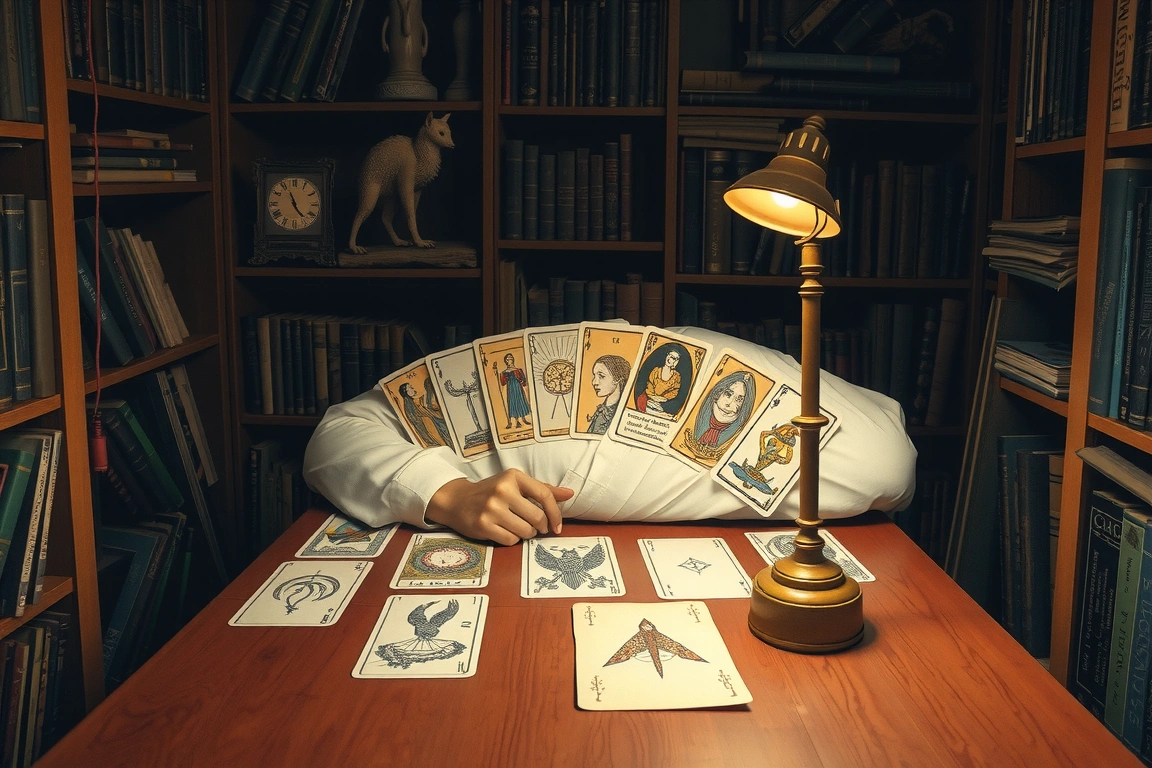
The elemental correspondences are not arbitrary. They come from a blend of Western esoteric traditions, including the Hermetic Order of the Golden Dawn (founded in 1888), which systematised the tarot with Kabbalistic and astrological associations. Wands correspond to Fire and the realm of will, creativity, and passion. Cups correspond to Water and the realm of emotion, intuition, and relationships. Swords correspond to Air and the realm of thought, communication, and conflict. Pentacles correspond to Earth and the realm of material security, work, and the physical body. Each suit contains ten numbered cards (Ace through Ten) and four court cards (Page, Knight, Queen, King), making fourteen cards per suit. When you understand the element, you already know the card’s core flavour before you even look at the image.
In my own practice, I have found that memorising the elemental meaning first—before any specific card interpretation—builds a foundation that makes readings fluid rather than robotic. For example, when the Three of Wands appears, I feel the Fire element first: expansion, vision, forward motion. The number three adds the energy of collaboration and growth. The image of a figure gazing at ships on the horizon reinforces that. But the elemental anchor is what keeps me from getting lost in the details. A simple reflection: the next time you draw a card, ask yourself—what element am I working with right now? Let that be your first answer.
The Major Arcana (22 Cards): The Fool’s Journey Through the Elements
The 22 Major Arcana cards are numbered 0 (The Fool) through 21 (The World), and together they tell a story of spiritual evolution known as the Fool’s Journey. Each card represents a stage of awakening, a challenge, or a gift that the soul encounters along the way. Unlike the Minor Arcana, the Major Arcana are not assigned to a single element; they contain all elements within them, reflecting their comprehensive, archetypal nature. However, some cards lean toward certain elemental energies. The Magician (I), for instance, channels all four elements—the tools on his table represent Wands, Cups, Swords, and Pentacles—making him a master of manifestation. The High Priestess (II) is deeply Watery: she sits at the threshold of the subconscious, wrapped in mystery and intuition.
Certain Major Arcana cards carry strong elemental signatures that influence how they read. The Tower (XVI) is a Fire card in essence—sudden destruction, lightning strike, upheaval that clears the way for rebuilding. The Star (XVII) is pure Water: healing, hope, flow, and emotional renewal after the Tower’s chaos. Temperance (XIV) blends Fire and Water, alchemically mixing opposites to create balance. The Moon (XVIII) is Watery and shadowy, connected to the subconscious, dreams, and illusion. The Sun (XIX) is Fire in its most radiant form: joy, vitality, clarity. Understanding these elemental leanings helps you read the Major Arcana with nuance rather than relying on memorised keywords alone.
Historically, the Major Arcana images have been influenced by Egyptian, Greek, and Christian iconography, but the modern Rider-Waite-Smith deck (published in 1909 by A. E. Waite and illustrated by Pamela Colman Smith) gave each card a detailed scene that made the symbolism accessible to everyday readers. Before that, the Marseille tradition (dating to the 15th century) used simpler, more abstract images. I recommend having at least one deck with clear, narrative imagery—the Rider-Waite-Smith remains the gold standard for beginners and seasoned readers alike. Meditation prompt: shuffle your Major Arcana cards, draw one, and ask—what soul lesson is currently unfolding in my life? Sit with the image for five minutes before looking up the meaning.
Wands (Fire): Creativity, Passion, and the Will to Act
The suit of Wands corresponds to the element of Fire—the spark of life, the drive to create, the heat of ambition. In readings, Wands cards often point to your career, your passions, your spiritual purpose, and the actions you take to bring your vision into reality. They are the suit of movement and growth, but also of burnout if the fire is not tended wisely. The Ace of Wands is a pure burst of creative potential—a new idea, a new venture, a surge of inspiration that demands you act. The Two of Wands suggests planning and world-expanding vision, but also the tension of waiting. The Three of Wands is about expansion and foresight—your plans are taking shape, and you are watching them sail forward.

The Four of Wands is a celebration—a homecoming, a milestone, a moment of stability after effort. The Five of Wands brings conflict, competition, and the friction of clashing egos. This card often appears when you are in a situation where multiple people have different agendas, and the fire energy is creating heat rather than light. The Six of Wands is victory and public recognition—a parade, a promotion, a moment when your efforts are seen. The Seven of Wands asks you to defend your position; you have worked hard to get where you are, and now you must hold your ground. The Eight of Wands is swift movement—arrows flying, messages arriving, things happening fast. The Nine of Wands is resilience—you are tired, bruised, but still standing, guarding what matters. The Ten of Wands speaks to burden—too much responsibility, the weight of carrying everything alone.
The court cards of the Wands suit embody Fire in different stages. The Page of Wands is a messenger of inspiration—a young, enthusiastic energy bringing news of a new project or idea. The Knight of Wands is impulsive, passionate, and ready to charge into adventure without full planning. The Queen of Wands is warm, charismatic, and confident—she knows her worth and inspires others through her presence. The King of Wands is a visionary leader, someone who has mastered their fire and uses it to create lasting impact. In a reading, these cards can represent actual people in your life or aspects of your own personality. When I see the Knight of Wands, I often ask: where am I rushing without looking? A common mistake beginners make is reading all Wands cards as purely positive; Fire can burn as easily as it can illuminate. Reflection question: where in your life is your fire serving you, and where is it consuming you?
Cups (Water): Emotions, Relationships, and the Inner World
The suit of Cups flows with the element of Water—the realm of feelings, intuition, love, grief, dreams, and the subconscious. Where Wands are about doing, Cups are about feeling. In readings, Cups cards often speak to your relationships, your emotional state, your creative inspiration (the watery kind), and your connection to the divine or the mysterious. The Ace of Cups is a wellspring of new emotion—a new love, a spiritual opening, a wave of compassion or joy that overflows. The Two of Cups is partnership, mutual attraction, and the merging of two souls in harmony. The Three of Cups is friendship, celebration, and communal joy—the kind of gathering where laughter flows freely. The Four of Cups is apathy, dissatisfaction, or a refusal to see the gift being offered—you are staring into your cup while ignoring the hand reaching toward you.
The Five of Cups is grief and loss—the classic image of a figure in a black cloak looking at three spilled cups while two remain standing behind them. This card is not about the loss itself, but about the choice to focus on what is gone rather than what remains. The Six of Cups is nostalgia, innocence, and the sweetness of the past—a card that often appears when you are revisiting childhood memories or reconnecting with someone from your history. The Seven of Cups is illusion, fantasy, and many choices—you may be seduced by possibilities that are not grounded. The Eight of Cups is walking away—leaving an emotional situation that no longer serves you, even if it hurts. The Nine of Cups is the wish card—emotional satisfaction, contentment, a sense of having what you truly desire. The Ten of Cups is the ultimate emotional fulfilment: lasting love, family harmony, a deep sense of belonging.
The court cards of Cups carry Water’s sensitivity and depth. The Page of Cups is a dreamy, intuitive messenger—often bringing news of a creative project or an emotional insight. The Knight of Cups is the romantic idealist—charming, artistic, and sometimes too lost in fantasy to act. The Queen of Cups is deeply empathetic, nurturing, and psychically attuned—she feels everything and holds space for others. The King of Cups is emotionally mature, compassionate, and in control of his feelings—he does not suppress emotion, but he does not let it drown him. In my readings, the Queen of Cups often appears when someone needs to trust their intuition more. A practical tip: when a Cups card appears in a reading, place your hand over your heart and notice what you feel before you think. The body knows before the mind catches up. Meditation prompt: draw a Cups card and ask—what am I feeling that I have not yet put into words?
Swords (Air): Intellect, Challenges, and the Power of the Mind
The suit of Swords cuts through the Air element—the domain of thought, communication, logic, truth, and conflict. Swords cards are often the most uncomfortable in a reading because they reveal the ways we wound ourselves with our own thinking. They are not inherently bad; they are the suit of clarity, but clarity can hurt before it heals. The Ace of Swords is a breakthrough of truth—a new idea, a moment of mental clarity, a decision made with sharp precision. The Two of Swords is stalemate—you are blindfolded, holding two swords crossed over your chest, refusing to see or choose. This card often appears when you are avoiding a difficult decision. The Three of Swords is heartbreak—the classic image of three swords piercing a heart, representing grief, betrayal, or painful truth that must be acknowledged. The Four of Swords is rest and retreat—a necessary pause after mental strain, a time to recover before the next battle.
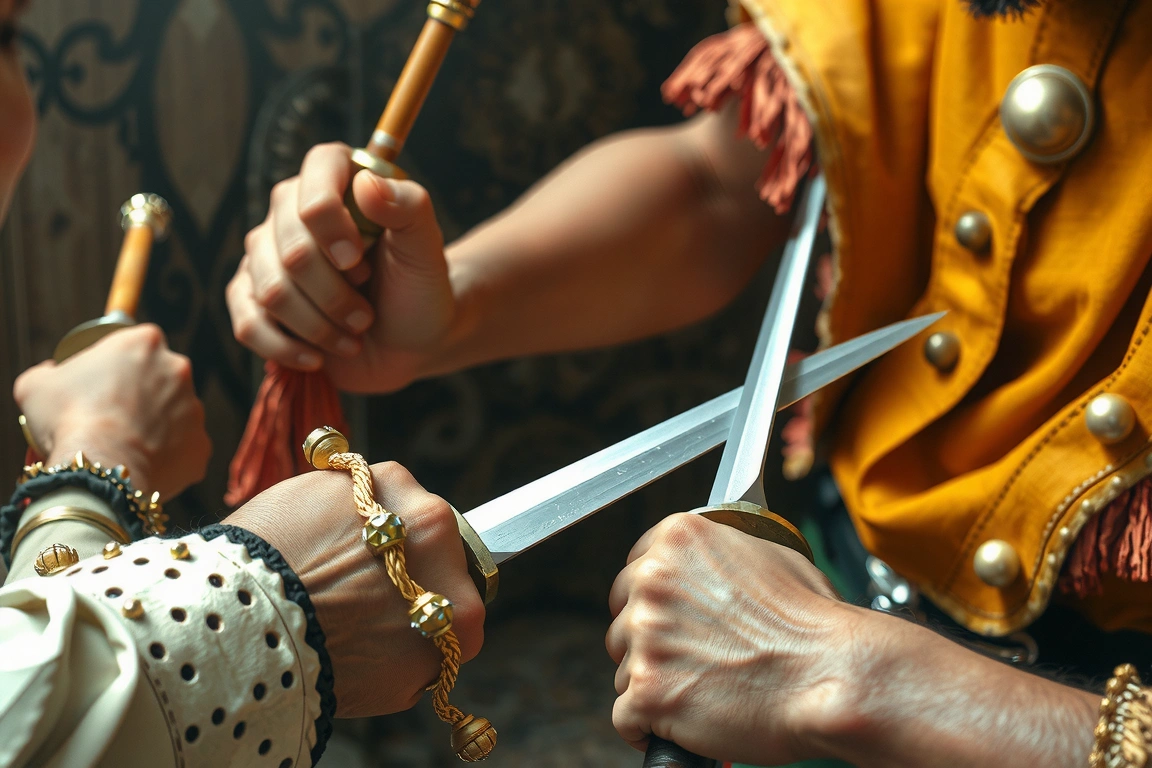
The Five of Swords is defeat, conflict, and winning at someone else’s expense. This card asks you to examine whether the victory is worth the cost. The Six of Swords is transition—moving away from troubled waters toward calmer shores, often after a period of difficulty. It is not a joyful card, but it is a card of healing movement. The Seven of Swords is deception, strategy, or sneaky behaviour—someone may not be telling the full truth, or you may be avoiding your own honesty. The Eight of Swords is feeling trapped—you are bound and blindfolded, but the swords around you are not a cage; they are your own limiting thoughts. The Nine of Swords is anxiety, nightmares, and the mind’s worst fears playing on repeat. This card is about mental suffering that feels overwhelming, but it is rarely as bad as the mind makes it seem. The Ten of Swords is a painful ending—the final blow, rock bottom, but also the promise that the only way from here is up.
The court cards of Swords embody Air’s intellect and directness. The Page of Swords is a curious, sharp-minded messenger—often bringing news that requires you to think quickly. The Knight of Swords is action driven by logic—he charges forward with his sword raised, sometimes without considering the emotional consequences. The Queen of Swords is perceptive, independent, and clear-eyed—she sees through lies and speaks the truth, even when it is hard. The King of Swords is the master of communication and justice—he rules with his mind, making fair decisions based on facts. A mistake I see often is readers fearing the Swords suit. Yes, these cards can be challenging, but they are also the suit of liberation through truth. When the Ace of Swords appears, it is a gift of clarity. Reflection question: what truth are you avoiding, and how would naming it set you free?
Pentacles (Earth): Material World, Work, and Physical Abundance
The suit of Pentacles is rooted in the element of Earth—the realm of money, career, health, home, and the physical body. Where Swords are about thinking and Cups about feeling, Pentacles are about doing and having. This suit is the most tangible in the tarot; it deals with the stuff of life: your paycheck, your garden, your savings account, your daily routines. The Ace of Pentacles is a seed of material opportunity—a new job, a financial gift, a chance to build something solid. The Two of Pentacles is juggling priorities—you are managing multiple responsibilities, often with a sense of playful but precarious
What is the difference between Major and Minor Arcana cards?
The Major Arcana (22 cards) represent significant life themes, soul lessons, and archetypal forces, often signaling major turning points. The Minor Arcana (56 cards) reflect the daily rhythms and practical matters of life, divided into four elemental suits that govern different areas of our experience.
What are the four suits of the Minor Arcana and their elements?
The four suits are Wands (Fire), Cups (Water), Swords (Air), and Pentacles (Earth). Each suit corresponds to an element and a specific domain of human experience, such as creativity, emotions, intellect, and material security.
Why are elemental correspondences important in tarot reading?
Understanding elemental roots transforms vague guesses into grounded, intuitive readings. The elements—Fire, Water, Air, Earth—provide a structured, symbolic framework that adds depth and clarity to a card’s meaning, connecting it to a specific energetic quality.
What is the origin of the tarot’s elemental system?
The elemental correspondences stem from Western esoteric traditions, most notably the teachings of the Hermetic Order of the Golden Dawn, founded in 1888. This system provides the symbolic architecture that underpins modern tarot interpretation.
You Might Also Like


Decode the Message
What does your spirit animal carry? Animal symbolism across world cultures, mythology, and spiritual traditions — weekly.
No spam. Unsubscribe anytime.
