
🕐13 min read
In This Article
Spirit Animal Discovery Guide
Find your spirit animal — comprehensive quiz, meanings, meditation techniques, and totem interpretations.
- What DIY Witchcraft Actually Demands
- When Professional Spellwork Becomes the Right Call
- Crystal Healing Properties: A DIY Deep Dive You Can Actually Use
- How to Cleanse Your Crystals: A Step-by-Step Ritual That Works
- The Real Cost Comparison: DIY vs Professional Spellwork
- Ethics and Cultural Respect in Both Paths
You’ve been casting your own spells for months. Maybe years. Your altar holds crystals you’ve cleansed under every moon phase, your grimoire is thick with handwritten invocations, and you’ve felt real shifts — a new job, a healed rift, a door that cracked open just when you needed it. But lately, something feels stuck. The same protection ritual you’ve done a hundred times lands flat. A love-drawing spell you crafted with precision seems to have fizzled instead of ignited. And you start wondering: should I hire someone who does this full-time? That question — DIY or professional — is one of the most quietly charged decisions in modern witchcraft. According to a 2023 survey by the Pew Research Center, roughly 16% of U.S. adults now identify as spiritual but not religious, and a growing slice of that group practices some form of folk magic. Etsy alone hosts over 120,000 active spellwork listings, ranging from $5 candle-dressing instructions to $450 custom ritual packages. But price tells you nothing about efficacy. What matters is alignment — between your skill level, the complexity of your intention, and the ethical container you want to work within. This article walks that line with you, naming real costs, real traditions, and the honest trade-offs between rolling up your sleeves and calling in an expert.
What DIY Witchcraft Actually Demands
DIY witchcraft is not the easy path. It is the path of slow, embodied learning — the kind that happens when you grind your own herbs, track Mercury retrograde on a paper calendar, and learn through mistakes that feel like small griefs. When I first started working with black tourmaline for protection, I didn’t know it needed weekly cleansing. I carried it for three weeks, absorbing everything, until I felt heavy in a way I couldn’t explain. That was DIY: the tuition was exhaustion, and the lesson was permanent.
What DIY gives you is direct relationship. You are not outsourcing your spiritual technology. You are building it, brick by brick, through trial, lunar timing, and the kind of attention that cannot be bought. A 2022 study in the Journal for the Scientific Study of Religion found that individuals who engaged in self-directed ritual practices reported higher levels of perceived spiritual agency than those who relied solely on clergy or professional practitioners. That agency — the felt sense that you moved the energy — is the core gift of DIY work.
But agency comes with responsibility. You need to know which crystals can sit in salt water (selenite dissolves; black obsidian is fine). You need to understand that a banishing ritual performed during a waning moon has a different signature than one done at the dark moon. You need to accept that some doors will not open because you lack the energetic vocabulary to turn the lock. DIY is not inferior to professional work. It is simply an apprenticeship with yourself, and like any apprenticeship, it asks for patience, research, and the humility to admit when you need help.
When Professional Spellwork Becomes the Right Call
Professional spellwork is not about laziness or privilege, though access certainly plays a role. It is about leverage. A skilled practitioner brings years of focused energy, refined technique, and — crucially — emotional distance from your situation. That distance is often the missing ingredient. When you are tangled in your own heartbreak, your grief bleeds into every candle you dress, every sigil you draw. A professional holds the container without the wound. They can see the pattern you are too close to read.
I once watched a friend spend eight months trying to break a cord with an ex-partner. She did every cord-cutting ritual she could find — full moon, new moon, with scissors, with flame. Nothing held. She finally hired a Hoodoo practitioner who charged $175 for a three-part working that included a dressed candle, a psalm reading, and a spiritual bath protocol. The shift was not instant, but it was real. Within two weeks, the obsessive thoughts quieted. Within a month, she stopped checking his social media. What the professional offered was not magic she could not do herself. It was magic she could not do cleanly because she was inside the storm.
Professional work is also appropriate for situations that require specific initiatory lineage. If you want a clearing grounded in the Afro-Cuban tradition of Santería, you should work with a Santero or Santera who has been through the full initiatory process — not a generalist who read a book. Similarly, certain forms of Egyptian temple magic or Vedic fire ceremonies (homa) require precise Sanskrit pronunciation, specific mudras, and offerings that must be sourced and prepared in a particular way. DIY cannot replicate that. It should not try to. Cultural specificity is not a barrier; it is a boundary that protects the integrity of the tradition.
Crystal Healing Properties: A DIY Deep Dive You Can Actually Use
Crystals are the most accessible entry point for DIY witchcraft, and also the most misunderstood. The idea that a stone simply radiates fixed energy is a simplification that does a disservice to the practice. Crystal healing works through resonance, not broadcasting. When you hold a piece of green aventurine, you are not receiving a signal. You are entraining your own energetic field to the stone’s stable, rhythmic vibration — a process called entrainment that has measurable parallels in physics (think of two pendulum clocks in the same room eventually syncing their swings).
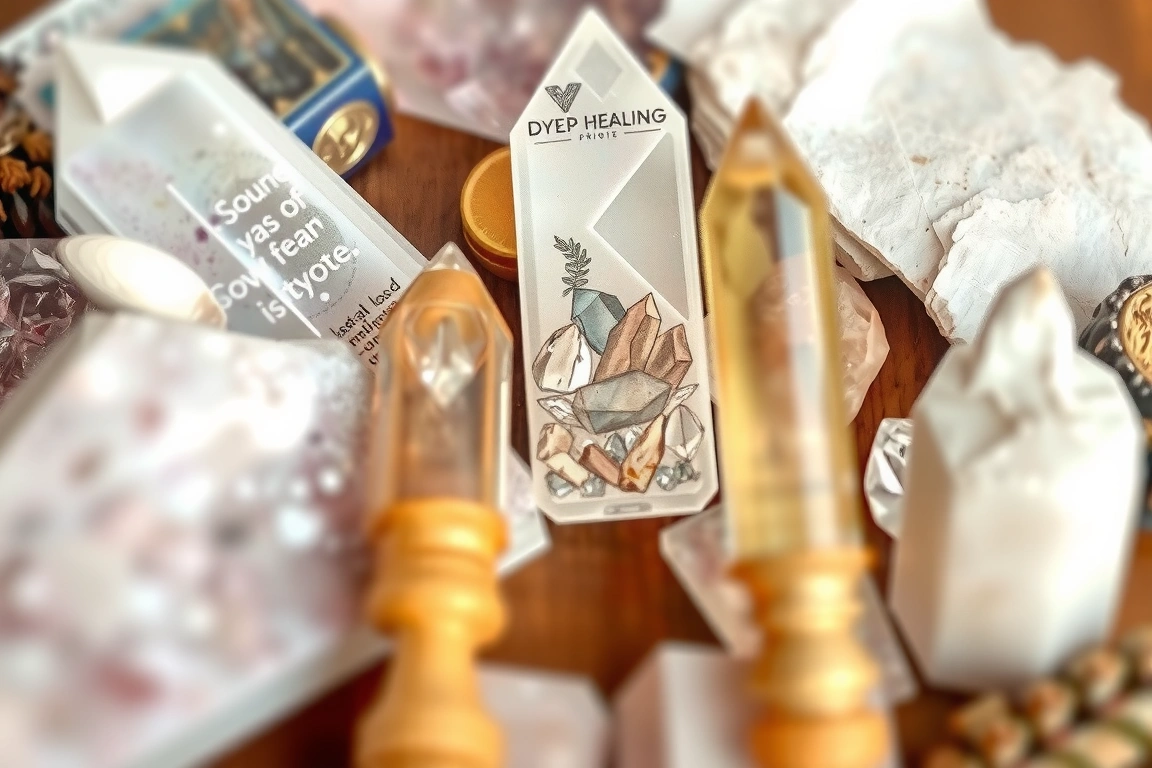
The specific properties of crystals are not arbitrary. They correlate with mineral composition, crystal system, and color frequency. Here is a grounded reference for five stones every DIY practitioner should know:
- Clear quartz (trigonal system, silicon dioxide): Amplifies intention and can be programmed. A 2018 study in Explore journal noted that quartz piezoelectricity (the ability to generate an electrical charge under pressure) may contribute to its subjective effects on focus and clarity. Price: $3–8 for a tumbled stone, $15–40 for a terminated point.
- Black tourmaline (trigonal system, complex borosilicate): Creates a dense energetic boundary. It is one of the few stones that actively repels low-vibration frequencies rather than absorbing them. Price: $5–12 for a small raw piece, $25–60 for a polished tower.
- Rose quartz (trigonal system, silicon dioxide with manganese and titanium): Emits a soft, steady frequency associated with heart-coherence and self-compassion. Do not use it as a substitute for therapy — but use it as a companion to therapy. Price: $4–10 for tumbled, $20–50 for a palm stone.
- Amethyst (trigonal system, quartz with iron irradiation): Calms the mind and supports dream recall. Historically used in Tibetan Buddhism for meditation focus. Price: $6–15 for a small cluster, $30–80 for a cathedral piece.
- Selenite (monoclinic system, gypsum): Self-cleansing and high-vibration. It does not hold negative energy; it transmutes it. Never submerge in water — it will dissolve. Price: $8–20 for a small wand, $25–60 for a larger tower.
These prices reflect typical 2024 market rates from reputable metaphysical shops like 13 Moons in Portland or online from Moonrise Crystals. The key is sourcing ethically — look for sellers who disclose mining practices and avoid stones from conflict zones or child-labor operations.
How to Cleanse Your Crystals: A Step-by-Step Ritual That Works
Cleansing is not optional. Every crystal you use for spellwork absorbs the energetic residue of your intention, your environment, and anyone who touches it. If you do not cleanse regularly, your stones become muddy — like a sponge that has soaked up too much dishwater and can no longer absorb clean liquid. The frequency depends on use. A protection stone you carry daily should be cleansed weekly. An amethyst on your nightstand used for sleep support can go two to three weeks. A crystal used in a heavy banishing or cord-cutting should be cleansed immediately after the working.
Here is a cleansing protocol I have refined over six years of practice, using methods that respect the stone’s physical properties:
- Check hardness using the Mohs scale. Stones below 7 (like selenite at 2, calcite at 3, or fluorite at 4) cannot tolerate water or salt. Stones at 7 or above (quartz, amethyst, agate, jasper) can handle brief water rinses — 30 seconds under cool running water, not longer.
- For water-safe stones: Hold under cool tap water while visualizing grey smoke washing away. Set on a clean cloth and pat dry. Do not use soap — it leaves a residue that interferes with energy.
- For all stones: Place on a selenite charging plate for 24 hours. Selenite self-cleanses and clears other stones by proximity. A 4×4 inch plate costs about $15–25 and lasts indefinitely with proper care (keep dry, dust occasionally).
- Moonlight alternative: Set stones on a windowsill during the full moon (29.5-day cycle, so you get 12–13 full moons per year). Leave from moonrise to moonset — roughly 6–8 hours depending on season. This works for all stones, including selenite.
- Smoke cleansing: Pass stones through the smoke of dried white sage (use ethically sourced, not overharvested — buy from Indigenous-owned suppliers like Sage Spirit), palo santo (also check sourcing), or cedar. 10–15 seconds per stone is sufficient. Do not use this method for porous stones like howlite, which can absorb smoke residue.
- Sound cleansing: Ring a singing bowl (432 Hz or 528 Hz tuning) near your stones for 30–60 seconds. Sound waves physically vibrate the crystal lattice, which can release stored energetic charge. This is the gentlest method and works for every stone.
I recommend rotating methods. Moon cleansing once a month, sound cleansing weekly, and selenite charging as needed. Do not over-cleanse — it can strip a stone’s natural resonance if done daily for weeks. Trust your hands: if a stone feels heavy or dull when you hold it, cleanse it. If it feels light and clear, let it be.
The Real Cost Comparison: DIY vs Professional Spellwork
Let us talk money without flinching. DIY witchcraft has a lower per-session cost but a higher upfront investment in tools and materials. Professional spellwork has a high per-session cost but requires zero tool accumulation on your part. Which is more economical depends entirely on how often you work and what you value.

Here is a realistic breakdown based on 2024 pricing from major metaphysical retailers and professional practitioners:
- DIY starter kit (one-time): $85–150. Includes 6–8 tumbled crystals ($30–50), a selenite charging plate ($20), white candles ($10–15 for a pack of 12), basic herbs (rosemary, lavender, sage — $15–25 total), and a small mortar and pestle ($15–25).
- DIY per-ritual cost: $2–10, assuming you already have the tools. This covers the candle, herb, and any single-use items like petition paper or thread.
- Professional single-session spellwork: $75–300, depending on complexity and practitioner experience. A simple candle dressing with prayer might run $75–100. A multi-day working with spiritual baths, candle sequences, and ancestral acknowledgment typically runs $200–500.
- Professional ongoing work: $150–600 per month for a series of workings or coaching. Some practitioners offer payment plans or sliding scales.
If you cast one ritual per month, DIY costs roughly $24–120 per year after the initial kit. Professional work for the same frequency would cost $900–3,600 per year. That is a 10x to 30x difference. But here is the nuance: DIY costs include your time. A well-crafted ritual with proper correspondences, lunar timing, and focused energy can take 2–4 hours of preparation and execution. Professional work takes 30–60 minutes of your time for the consultation and any personal participation required.
There is also the cost of mistakes. A poorly executed DIY banishing can leave energetic residue that takes months to clear. A professional who knows how to close a container properly reduces that risk significantly. Factor that into your math.
Ethics and Cultural Respect in Both Paths
This is the section most articles skip, and it is the most important. DIY witchcraft has a shadow side: the temptation to cherry-pick from closed traditions without context. I have seen well-meaning practitioners buy mass-produced smudge kits from chain stores, not realizing that the white sage inside was likely harvested by non-Indigenous companies who have no relationship with the plant or the people. The result is cultural extraction dressed in spiritual language.
If you are DIY, you have a responsibility to know what is open and what is closed. Open
You Might Also Like

Decode the Message
What does your spirit animal carry? Animal symbolism across world cultures, mythology, and spiritual traditions — weekly.
No spam. Unsubscribe anytime.
