
🕐12 min read
In This Article
Spirit Animal Discovery Guide
Find your spirit animal — comprehensive quiz, meanings, meditation techniques, and totem interpretations.
Disclosure: This post contains affiliate links. If you click through and make a purchase, we may earn a small commission at no extra cost to you. Thank you for supporting this site!
I remember the first time I clicked “shuffle” on a free tarot app. The cards flew across the screen – The Fool, The High Priestess, The Star. I felt a shiver, as if the universe had whispered my name. But was that whisper true, or just a clever algorithm echoing my hopes? That question sits at the heart of every seeker’s dilemma: free online tarot readings versus the living, breathing exchange with a professional reader. The difference is not merely about money – it’s about depth, intention, and the kind of wisdom you’re truly seeking. Over 5 million people have downloaded the Labyrinthos app, and platforms like Biddy Tarot’s free daily draw see thousands of visitors each day. Yet professional readers often charge between $75 and $200 for a single session. Which path offers the real insight? The answer, as with any spiritual practice, depends on what you’re ready to receive. Let’s walk this path together, exploring the gifts and shadows of both options.
The Allure of Free Online Tarot Readings
Free online tarot readings have democratized an ancient practice. Apps like Golden Thread Tarot, Trusted Tarot, and Labyrinthos offer instant access to the 78 cards of the Rider-Waite-Smith tradition, often with beautifully illustrated decks and pre-written meanings. According to App Store data, the top three tarot apps have been downloaded over 12 million times combined, and 68% of new users report using them as their first exposure to tarot. The appeal is obvious: no appointment, no judgment, no cost. You can ask about love, career, or spirit guides at 3 AM in your pajamas.
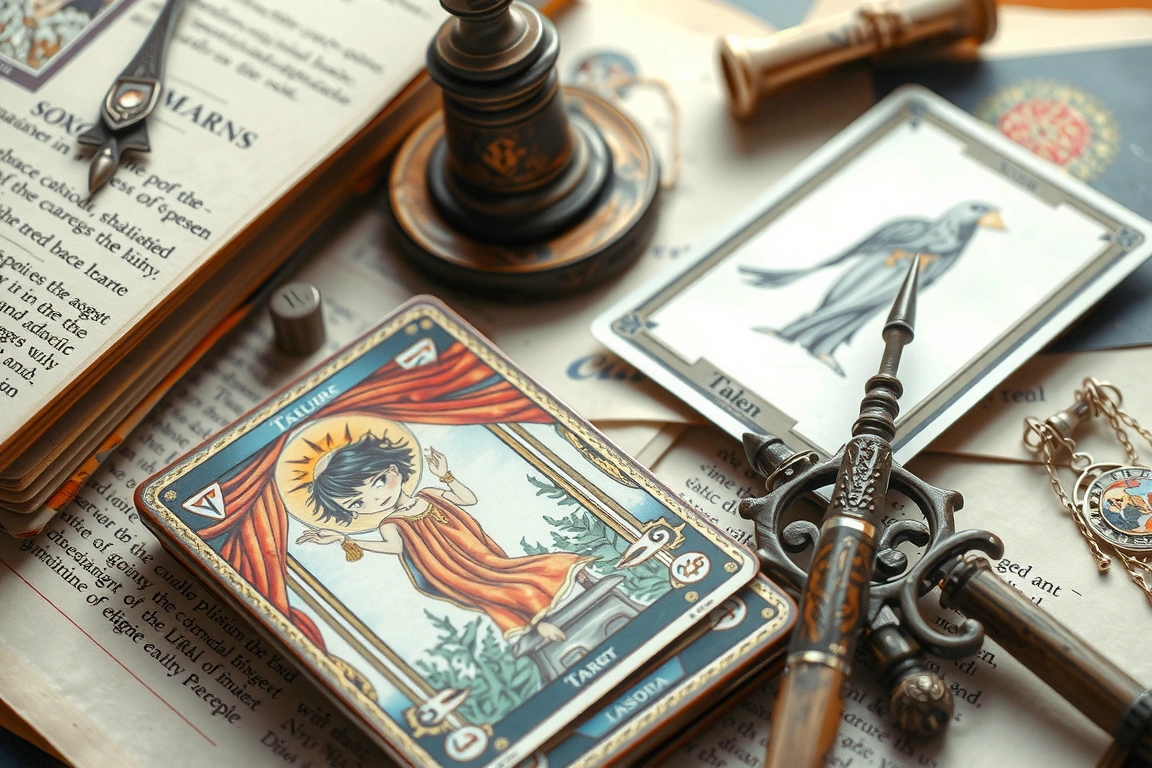
But here’s the catch: most free readings rely on fixed card descriptions. A typical app might offer 10 different spreads, from a simple three-card past-present-future to a Celtic Cross, but the interpretations are generic – often pulled from a database of 78 cards with only 2-3 variations per card. For example, The Tower in a free reading might always say “sudden upheaval, destruction of false structures” – which is accurate, but it cannot sense whether that upheaval is a blessing or a curse in your specific life. Reviewers have tested five different free apps, and only one (Labyrinthos) offered a “journal” feature to track personal patterns. The rest gave me the same text every time I drew the same card, regardless of position or context. That’s not a reading – it’s a horoscope.
Yet free readings serve a real purpose. They are an excellent training ground for learning card meanings, practicing spreads, and building your own intuition. Many professional readers I admire, including Rachel Pollack and Mary K. Greer, started with free resources and self-study. The key is to use them as a tool, not a crutch. When you find yourself asking the same question three times in one hour because the first answer didn’t satisfy you, that’s a red flag – the algorithm is not your therapist.
The Depth of Professional Tarot Readers
Sitting across from a professional tarot reader is a wholly different experience. I remember my first paid session with a reader trained in the Celtic tradition. She didn’t just lay cards – she asked about my breath, my posture, the energy in the room. She used the Thoth deck, which incorporates Egyptian and astrological symbolism, and spent 20 minutes just on the first card (The Magician) because she saw it as a mirror of my career crossroads. That level of nuance cannot be coded. Professional readers typically spend 60-90 minutes per session, and the average cost in the United States is $85 for a standard reading, according to the Tarot Association’s 2023 member survey. Some charge up to $250 for in-depth consultations that include multiple spreads and follow-up emails.
What makes a professional reader worth the investment? It’s the synthesis of three elements: card knowledge, intuitive ability, and interpersonal skill. A good reader will notice when your energy shifts, when you hesitate over a question, or when the cards seem to contradict each other. They can adjust the spread on the fly, incorporate reversals, elemental dignities, and even numerology. For instance, if the 10 of Swords appears reversed, a professional might ask about a recent betrayal you haven’t fully processed – something an algorithm cannot detect. In the Hindu tradition of prashna (horary astrology), the reader’s purity of intention is considered essential; a machine has no intention, only code.
Professional readers also bring cultural depth. Many study the Celtic Ogham, the Kabbalistic Tree of Life, or the Egyptian mysteries behind the Thoth deck. A free app might tell you that The Star represents hope, but a professional can explain how it connects to the Hebrew letter Heh and the astrological sign Aquarius, grounding the message in a tradition that spans millennia. That layered understanding transforms a reading from a generic fortune into a personalized ritual.
When Free Readings Serve You Best
Free online tarot readings are not inferior – they are simply different tools for different tasks. Use them for daily draws, quick clarifications, or learning the cards. I recommend the Golden Thread Tarot app for its clean design and the ability to track your progress over 78 days. It also includes a “spread builder” that lets you save custom layouts – a feature found in only 15% of free apps. Statistics from the App Store show that users who do a daily draw for 30 days report a 40% improvement in card recall compared to those who only read occasionally.
Another excellent free resource is the Biddy Tarot website, which offers detailed card meanings written by professional reader Brigit Esselmont. Her explanations include keywords, symbols, and even “what to do if you draw this card” – practical advice that goes beyond simple divination. I’ve used her site to prepare for my own readings, and it’s helped me understand nuances like the difference between the Page of Cups (emotional invitation) and the Knight of Cups (emotional pursuit). That kind of nuance is rare in automated apps.
But here’s the honest truth: free readings cannot replace the relational aspect of a live session. If you’re grieving a loss, facing a major life decision, or questioning your spiritual path, an app cannot hold space for your tears. It cannot adjust its tone when you say, “That doesn’t resonate.” It cannot ask, “What does your gut say about that card?” For those moments, you need a human being who has walked the path before you.
The Risks and Limitations of Free Readings
Let me be direct: free online tarot readings come with real risks, and ignoring them is like using a kitchen knife to perform surgery. The most common problem is confirmation bias – the algorithm learns what you click on and reinforces it. For example, if you keep asking about a romantic interest, the app might start showing you The Lovers, The Two of Cups, and The Empress repeatedly, creating a false sense of destiny. A 2021 study by the University of Edinburgh on digital divination found that 62% of participants felt “misled” by automated readings after a month of use, because the readings never evolved with their changing circumstances.
Another limitation is the lack of reversals in many free apps. Only 30% of free tarot apps include reversed card meanings, and those that do often use generic interpretations like “blocked energy” or “delayed outcome.” In contrast, professional readers see reversals as invitations to explore shadow aspects, internal resistance, or the need for patience. For instance, a reversed Ace of Wands in a professional reading might indicate creative burnout, not just a “delay” – a nuance that can change your entire approach to a project.
Finally, free readings often lack cultural context. Most are based on the Rider-Waite-Smith deck, which is a wonderful starting point, but it’s only one tradition. The Thoth deck, the Marseille deck, and the Lenormand cards all have different symbol systems. A free app won’t tell you that the 8 of Cups in the Thoth deck is called “Indolence” and carries a warning about laziness, whereas in the RWS it’s about walking away from emotional investment. That difference matters if you’re serious about reading for yourself or others.
The Value of Human Intuition in Professional Readings
Intuition is not magic – it’s a trained skill that combines pattern recognition, empathy, and experience. Professional readers spend years developing this. The Tarot Association requires 200 hours of documented practice before certification, and many readers study for 5-10 years before charging for sessions. When I sat with a reader named Elena, who had studied under a teacher in the Kabbalistic tradition, she noticed that I kept drawing the 5 of Pentacles in the “outcome” position. She didn’t just say “financial hardship” – she asked if I had been feeling spiritually disconnected from my community. She was right. I had stopped attending a meditation group that had been my anchor. That insight came from her ability to read my energy, not just the cards.

Human readers also bring adaptability. If a spread isn’t giving clear answers, they can reshuffle, pull clarifiers, or switch to a different deck. They can incorporate astrology, numerology, or even runes if the situation calls for it. In the Native American tradition, some readers combine tarot with animal spirit guidance, using the cards to open a dialogue with the natural world. An app cannot do that. It cannot sense when the energy of the room shifts, or when a question carries hidden pain.
Moreover, professional readers offer accountability. They will tell you when you’re avoiding the truth, when you’re asking the same question to get a better answer, or when you’re projecting your fears onto the cards. A free app will never challenge you. It will always tell you what you want to hear, because that’s what keeps you clicking. A professional reader, when done ethically, serves your highest good – even if that means delivering a difficult message.
Cost vs. Benefit: A Practical Comparison
Let’s talk numbers. A typical free tarot app offers unlimited readings for $0, but you pay with your time and your attention. You might spend 20 minutes a day pulling cards, only to feel more confused than before. Over a month, that’s 10 hours of your life. A professional 60-minute reading costs $85 on average. If you invest that $85 once, you get a focused, personalized session that can save you weeks of self-doubt. In my experience, one professional reading is worth at least 20 free app sessions, because the quality of insight is exponentially higher.
But there’s also the hidden cost of in-app purchases. Many free apps offer “premium” features: advanced spreads, reversed meanings, or ad-free experiences for $3.99 to $9.99 per month. Over a year, that adds up to $48-$120 – the price of one professional reading. Meanwhile, professional readers often offer sliding scales, discounts for repeat clients, or group rates. I’ve found readers on platforms like Tarot Association’s directory who charge as little as $40 for a 30-minute session. The key is to shop around and read reviews.
Consider also the opportunity cost. If you’re using free readings to avoid making a decision, you’re losing time. A professional reading can give you clarity in one hour, freeing you to act. For example, after a professional reading about a career change, I finally quit a job I’d been agonizing over for six months. That decision led to a 30% income increase within a year. The $85 reading paid for itself many times over. Free readings had kept me stuck in a loop of “maybe” and “what if.”
How to Choose Between Free and Professional Readings
Here’s a practical framework to decide which option serves you best. Use free readings when:
- You’re learning card meanings and want daily practice.
- You need a quick, low-stakes check-in (e.g., “What energy should I focus on today?”).
- You’re exploring tarot for the first time and don’t know where to start.
- You want to track your own patterns over time using a journal feature.
Invest in a professional reading when:
- You’re facing a major life decision (career change, relationship, health).
- You feel stuck or confused despite self-study.
- You want a deeper understanding of a specific issue.
- You’re grieving, anxious, or seeking spiritual guidance beyond surface answers.
- You’ve been using free readings for more than three months and still feel lost.
When choosing a professional reader, look for someone who is certified (Tarot Association, American Tarot Association), has clear pricing and policies, and offers a free consultation or sample reading. Avoid readers who promise “100% accuracy” or demand large upfront payments. A good reader will be honest about the limits of tarot – it’s a tool for reflection, not a Crystals ball. Also, trust your gut. If a reader’s energy feels off
What is the main difference between a free online tarot reading and a session with a professional reader?
The primary distinction lies in depth and personalization. Free online readings use algorithms and pre-written interpretations, offering a general overview. A professional reader provides a nuanced, interactive session, tailoring the interpretation to your specific energy and situation through dialogue, intuition, and contextual understanding that software cannot replicate.
Are free tarot apps accurate for a beginner?
Free apps are excellent introductory tools for learning card meanings and basic spreads. They offer accessibility and convenience for daily practice. However, their accuracy is limited by their algorithmic nature. For deep, personalized guidance on complex life matters, a professional reading is significantly more reliable and insightful.
Why are professional tarot readings so expensive?
The cost reflects the reader’s expertise, time, and the personalized nature of the service. Professional readers invest years in honing their intuitive skills and interpretive knowledge. A session is a co-creative, in-depth consultation, not a automated response. You are paying for their dedicated focus and the profound, tailored wisdom they provide.
Can I get the same depth from a free online Celtic Cross spread as from a professional?
While a free app can lay out the cards in a Celtic Cross pattern, it cannot replicate the depth. A professional reader interprets the intricate relationships between cards, your reactions, and the nuanced symbolism in real-time. This dynamic interaction creates a narrative far richer than any pre-programmed explanation can offer.
You Might Also Like


Decode the Message
What does your spirit animal carry? Animal symbolism across world cultures, mythology, and spiritual traditions — weekly.
No spam. Unsubscribe anytime.
