
🕐12 min read
In This Article
Spirit Animal Discovery Guide
Find your spirit animal — comprehensive quiz, meanings, meditation techniques, and totem interpretations.
- What Tarot Really Is: History and Soul
- Choosing Your First Deck: Three Paths
- Preparing Your Space and Mind
- Understanding the Major Arcana: 22 Doorways
- Understanding the Minor Arcana: 56 Everyday Mirrors
- Your First Spread: The Three-Card Pull
- Interpreting the Cards: Intuition Meets Structure
- Common Mistakes and How to Avoid Them
Disclosure: This post contains affiliate links. If you click through and make a purchase, we may earn a small commission at no extra cost to you. Thank you for supporting this site!
You’re sitting at a small wooden table, a deck of cards wrapped in silk before you. Your palms are slightly damp, and the air smells of lavender from a Candles flickering nearby. You’ve shuffled the deck three times, just as the online guide said, and now you’re supposed to pull a card. But your mind is blank. What does this card mean? Am I doing it right? The questions pile up like leaves in autumn. I remember my own first reading—a clumsy, self-conscious affair with a borrowed Rider-Waite-Smith deck that cost $24.95 at a local metaphysical shop. I drew The Tower, and my heart sank. But here’s the truth: that card didn’t predict disaster; it taught me about sudden change. Tarot isn’t fortune-telling. It’s a mirror for your inner world, a conversation between your conscious mind and the symbols that speak to your soul. And you can learn to read it—not by memorizing every meaning, but by building a relationship with the cards. This guide will walk you through the first steps, from choosing a deck to interpreting a spread, with warmth and practical wisdom drawn from decades of practice.
What Tarot Really Is: History and Soul
Tarot didn’t spring from ancient Egyptian temples, despite what some 19th-century occultists claimed. The earliest surviving decks date to 15th-century Italy, where they were used for a game called tarocchi. It wasn’t until the late 1700s that French occultist Jean-Baptiste Alliette (known as Etteilla) began using tarot for divination. The deck we know today—78 cards divided into Major and Minor Arcana—was codified by the Hermetic Order of the Golden Dawn in the 1880s, a secret society that blended Kabbalah, astrology, and ceremonial magic. Artist Pamela Colman Smith, guided by Arthur Edward Waite, created the iconic Rider-Waite-Smith deck in 1909, which remains the gold standard for beginners. Its images are rich with symbolism: the Fool carries a small bag representing untapped potential, the High Priestess sits between two pillars of duality. Understanding this history grounds your practice. Tarot is a living tradition, not a fixed doctrine. It borrows from Jewish mysticism, Greek mythology, and medieval Christian imagery, all woven together by human longing for meaning. When you hold a deck, you’re holding centuries of spiritual seeking.
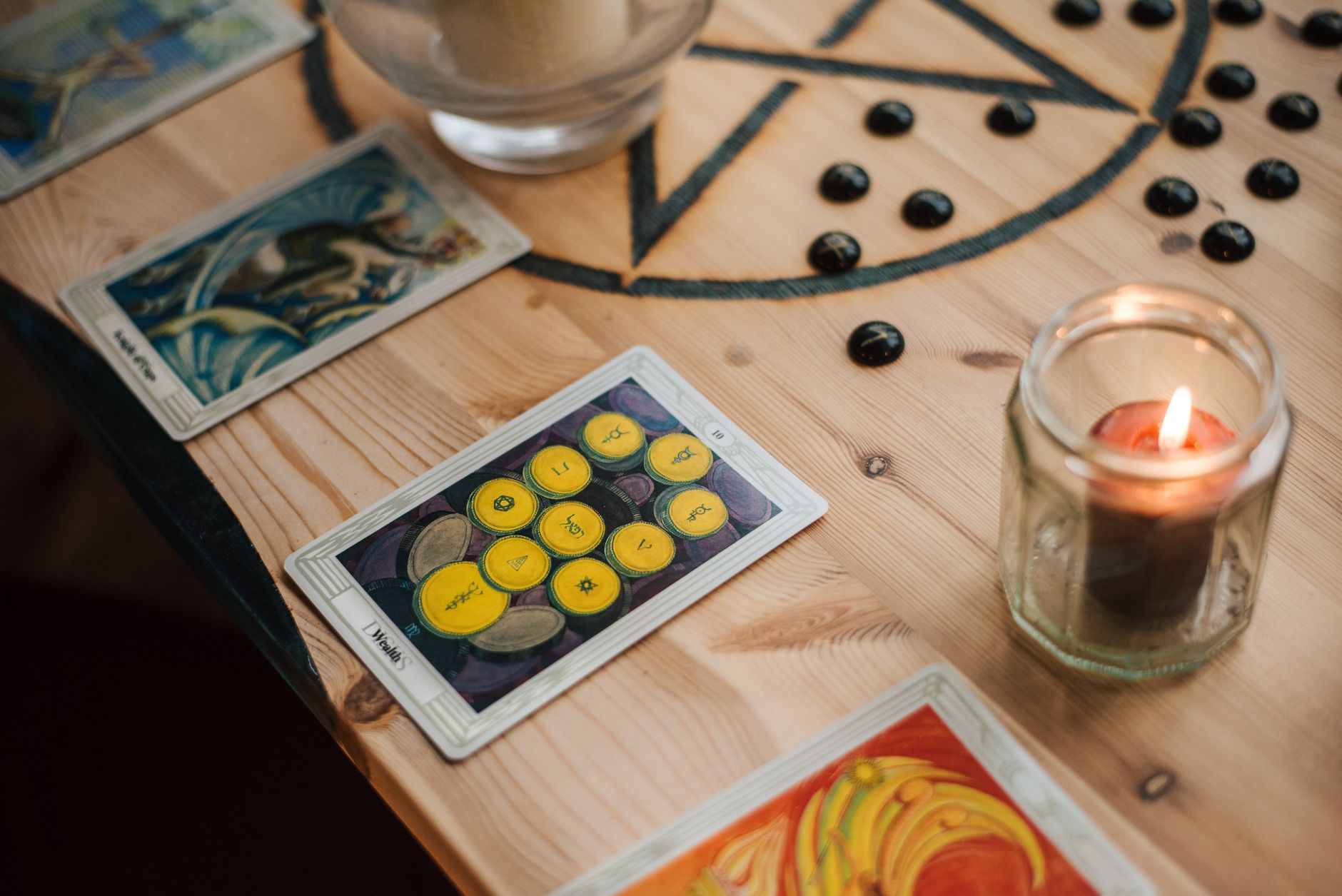
For your first reading, you don’t need to memorize the Kabbalistic correspondences or the planetary rulers. What matters is the core purpose: tarot helps you access your intuition. The cards act as keys that unlock your subconscious. A 2017 study in the Journal of Consciousness Studies even suggested that the ambiguous imagery of tarot can stimulate the brain’s default mode network, the area associated with self-reflection and daydreaming. So when you draw a card, you’re not receiving a fixed message from the universe—you’re co-creating meaning with your own psyche. That’s why two readers can pull the same card and interpret it differently. Honor that fluidity. Your first reading is a conversation starter, not a final verdict.
Choosing Your First Deck: Three Paths
The deck you choose shapes your entire experience. I recommend starting with one of three options, each with a distinct personality and price point. First, the Rider-Waite-Smith (RWS) deck, available for $21.95 to $28.95 depending on the edition. Its 78 cards are fully illustrated, meaning every Minor Arcana card has a scene that tells a story—unlike older decks where the numbered cards were just patterns of cups or wands. The RWS is the standard reference for most tarot books and apps, so learning with it is like learning to read with a basic primer. Second, the Morgan-Greer deck, around $24.99, is a 1970s reimagining with bolder colors and closer-up figures. It retains the RWS symbolism but feels more intimate and emotional. Third, the Wild Unknown deck by Kim Krans ($28.95) uses stark black-and-white line drawings with splashes of color. Its animal symbolism (the Fool as a fox, the High Priestess as a moth) appeals to nature-connected seekers, but its minimal style can be challenging for beginners because it offers fewer visual cues.
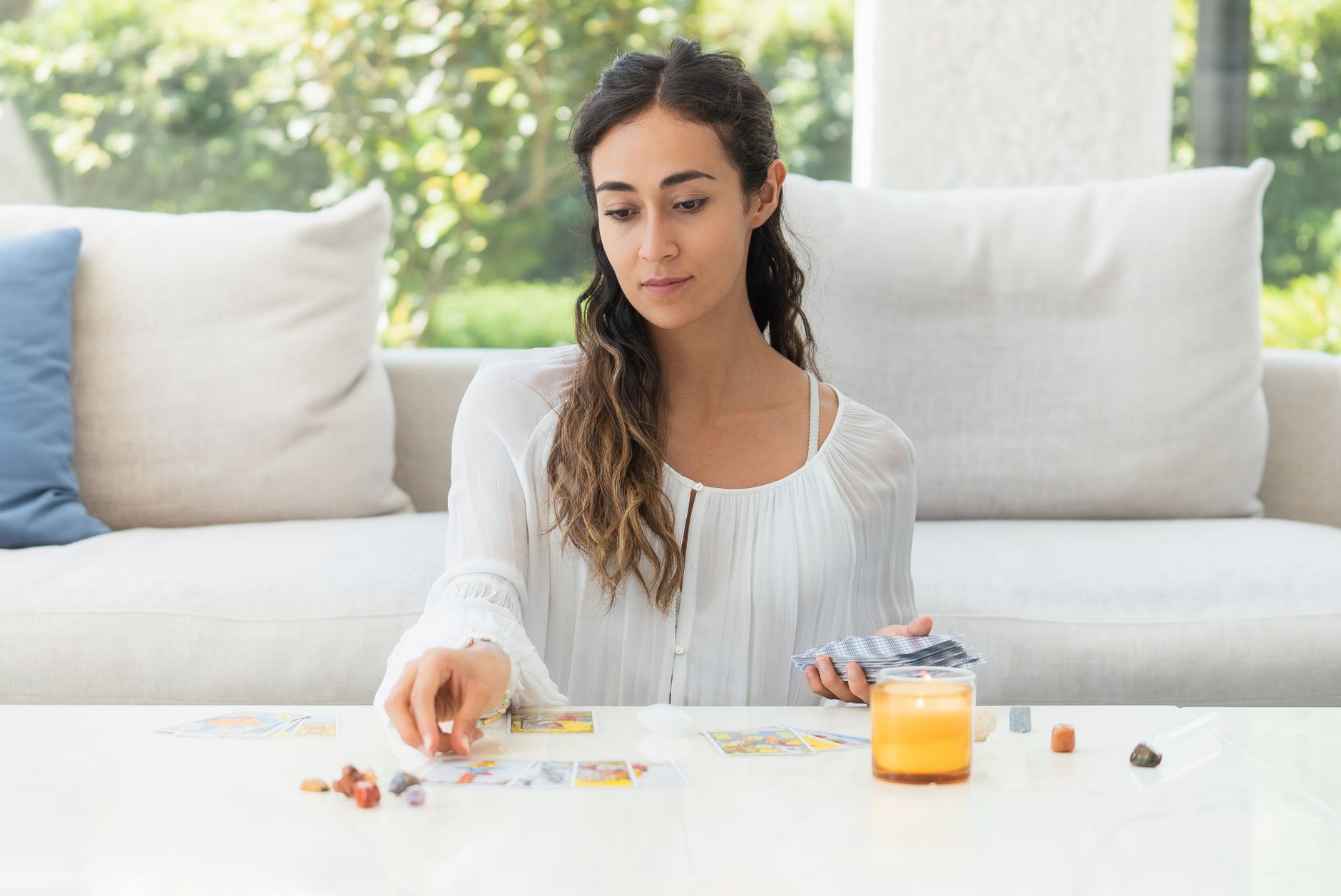
I suggest buying a physical deck rather than relying solely on apps. The tactile experience of shuffling, the weight of the cards, the ritual of unwrapping—these sensory details anchor your reading in the present moment. When Reviewers tested the RWS deck against the Wild Unknown, I found that the RWS’s detailed backgrounds (like the crumbling wall in The Tower) gave me more to work with during my first month. But if you feel a strong pull toward the Wild Unknown’s aesthetic, trust that. Your connection to the artwork matters more than any “best for beginners” label. Whichever you choose, spend a week just looking at the cards. Flip through them daily. Notice which ones make you feel curious, uneasy, or excited. That initial emotional reaction is your first lesson in tarot symbolism.
Preparing Your Space and Mind
Before you lay out a single card, you need to create a container for the reading. This doesn’t require an altar or expensive tools—just a clean surface and a few minutes of focused attention. I clear my desk of clutter, light a beeswax candle (about $8 for a pack of four), and place a small piece of selenite nearby. Selenite is a crystal known for cleansing energy; you can find tumbled stones for $3 to $5 at most crystal shops. If you don’t have crystals, a bowl of sea salt works just as well. The point is to signal to your mind that this is a sacred moment, separate from the noise of daily life.

Next, cleanse your deck. Many traditions recommend smudging with sage or palo santo. Light the bundle, let it smoke for about 30 seconds, then pass each card through the smoke while setting an intention like “I clear this deck of all energy except my own.” Alternatively, you can knock on the deck three times or place it under a full moon for four hours. I prefer the moon method because it feels gentler and connects the cards to lunar cycles—a practice rooted in Wiccan and folk magic traditions. After cleansing, hold the deck to your heart. Take five deep breaths, inhaling for four counts, holding for four, exhaling for four. Then ask a simple question aloud: “What do I need to know today?” This isn’t about getting a specific answer; it’s about opening a channel. Your first reading should feel like a quiet conversation, not a test.
Understanding the Major Arcana: 22 Doorways
The Major Arcana consists of 22 cards, numbered 0 (The Fool) through 21 (The World). These cards represent life’s major themes and spiritual lessons. They are the archetypes, the big stories: The Magician (willpower), The High Priestess (intuition), Death (transformation), The Sun (joy). For beginners, the Major Arcana is easier to grasp than the Minor because each card has a clear, symbolic image. The Fool, for instance, shows a young man about to step off a cliff, a small dog barking at his heels. He carries a rose in one hand and a bundle on a stick—symbols of innocence and readiness for adventure. This card doesn’t mean you’re about to fall; it suggests a new beginning, a leap of faith.
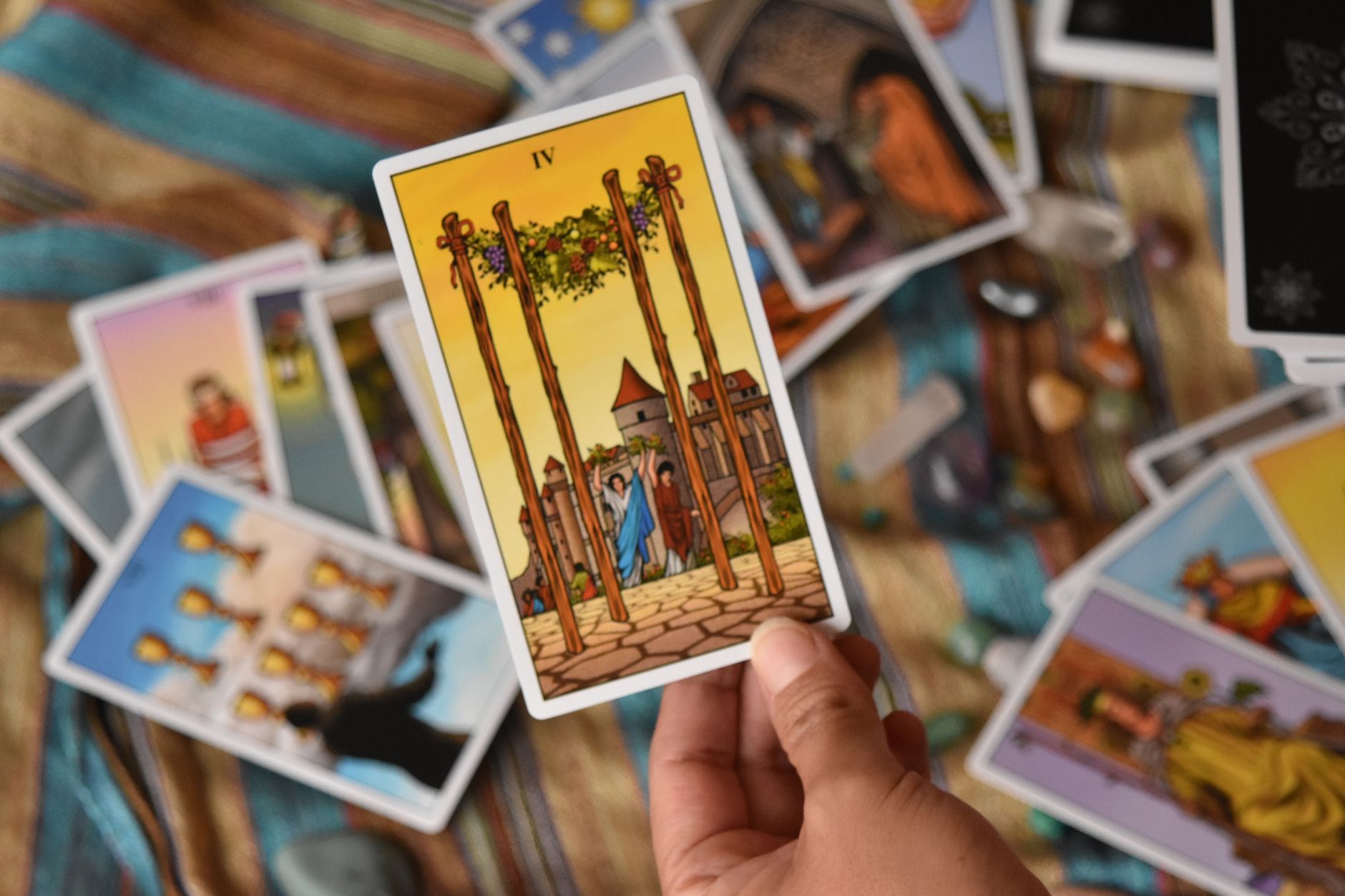
When I first pulled The High Priestess, I felt confused by her scroll and the pomegranates behind her. I later learned that the scroll is partially hidden, representing hidden knowledge, and the pomegranates reference the myth of Persephone, who was bound to the underworld for half the year. That connection to Greek mythology deepened my reading. You don’t need to know every myth, but recognizing these layers adds richness. A simple way to learn the Majors is to study one card per day. Write down three keywords that come to mind when you look at the image. For The Moon, I wrote “illusion, fear, hidden truths.” After a week, you’ll have a personal dictionary. The Majors appear less frequently in a reading (about 30% of the time in a standard spread), but when they do, they signal significant energy. Pay attention.
Understanding the Minor Arcana: 56 Everyday Mirrors
The Minor Arcana is divided into four suits: Wands (fire, action, passion), Cups (water, emotion, relationships), Swords (air, intellect, conflict), and Pentacles (earth, material life, work). Each suit has 10 numbered cards (Ace through Ten) and four court cards (Page, Knight, Queen, King). The numbers carry meaning: Aces are new beginnings, Twos are balance, Threes are growth, and so on. For example, the Three of Wands shows a figure looking out to sea, ships in the distance. It speaks of planning, expansion, and foresight. The Three of Cups shows three women dancing, cups raised—celebration, friendship, joy. The suit element influences the energy: Wands are fiery and fast, Cups are fluid and emotional, Swords are sharp and mental, Pentacles are slow and practical.
To make the Minors less overwhelming, focus on one suit per week. I started with Cups because I’m an emotional reader, and I found that the court cards (Page of Cups, Knight of Cups, etc.) mirrored people in my life. The Page of Cups is a dreamy messenger, often a child or a creative idea. The Knight of Cups is a romantic pursuer, sometimes a lover or a proposal. When you see a court card, ask yourself: Is this a person I know, or an aspect of myself? The Queen of Pentacles might represent your nurturing, practical side. The King of Swords might be your logical, truth-seeking voice. This personification makes the cards feel alive. A 2020 survey by the Tarot Association found that 68% of beginners struggled most with court cards, so give yourself grace. Use a cheat sheet if needed—I kept a laminated card with suit meanings in my deck box for six months.
Your First Spread: The Three-Card Pull
Start with a one-card draw for a week to build confidence. Shuffle the deck while thinking of a question or just your day ahead. Cut the deck into three piles, then reassemble. Draw the top card. Place it in front of you. Look at it for a full minute without trying to interpret. Notice colors, symbols, the posture of figures. Then ask: “What is the core message?” Write your answer in a journal. After seven days of one-card draws, you’re ready for the three-card spread. This classic layout represents Past, Present, Future or Mind, Body, Spirit—choose one framework and stick with it. I prefer Past-Present-Future for general readings because it tells a story.
Here’s a step-by-step for your first three-card reading:
- Cleanse your space and deck as described above.
- Formulate a clear, open-ended question. Avoid yes/no questions. Instead of “Will I get the job?” ask “What energy surrounds my career path?”
- Shuffle seven to ten times, focusing on your question. When you feel a natural pause, stop.
- Cut the deck into three piles with your left hand (traditionally the receptive hand). Reassemble in any order.
- Draw the top three cards and lay them left to right: Position 1 (Past), Position 2 (Present), Position 3 (Future).
- Interpret each card individually first, then weave them into a narrative. For example, if you draw The Fool (Past), The Magician (Present), and The World (Future), the story might be: You started a journey with innocence, you now have the tools to manifest, and completion is on the horizon.
- Spend at least 15 minutes with the spread. Write down your impressions. Don’t rush to look up meanings—trust your first instinct.
Interpreting the Cards: Intuition Meets Structure
The greatest mistake new readers make is treating the cards like a dictionary. You don’t need to memorize all 78 meanings. Instead, combine three sources: the card’s traditional meaning, the imagery on the card, and your gut feeling. When I drew the Five of Pentacles in a reading about finances, the book said “poverty, hardship.” But the card shows two figures outside a church in the snow, and I felt a pang of isolation rather than literal lack. I asked my client if she felt excluded from a community. She nodded, tears in her eyes. The card was about emotional poverty, not financial. That moment taught me that the image speaks louder than the keyword.
Use a simple framework for each card: name the card, describe what you see, list three emotions it evokes, then connect it to the question. For reversals (cards upside down), don’t panic. Reversals can mean blocked energy, internalized meaning, or a need to look deeper. I interpret them as a nudge to examine the shadow side. The reversed Sun might indicate joy that’s hidden or delayed, not absent. Over time, you’ll develop your own system. A good practice is to pull one card each morning and journal about how it shows up during the day. After a month, you’ll notice patterns. The Three of Swords (heartbreak, sorrow) might appear before a difficult conversation, or the Ace of Cups (new love, emotional opening) might coincide with a creative breakthrough. This real-time feedback builds trust in your intuition.
Common Mistakes and How to Avoid Them
Every beginner stumbles. Here are the pitfalls I see most often, with specific fixes. First, reading too literally. If you draw Death, you don’t need to
Is tarot reading a form of fortune-telling?
No, tarot is not primarily about predicting a fixed future. Instead, it serves as a reflective tool for exploring your inner world. The cards act as a mirror, facilitating a conversation between your conscious mind and subconscious wisdom. The focus is on gaining insight into your current situation, potential paths, and personal growth rather than on deterministic predictions.
What is the best tarot deck for a beginner?
The Rider-Waite-Smith deck is widely recommended for beginners. Its iconic, symbolic imagery provides a strong foundation for learning card meanings intuitively. Because most modern tarot resources reference its symbolism, starting with this deck makes the learning process more accessible. Ultimately, however, the best deck is one whose artwork personally resonates with you and encourages a genuine connection.
Do I need to memorize all the card meanings to start reading?
Not at all. Effective tarot reading is less about rote memorization and more about building a personal relationship with the cards. Begin by learning the core themes of the Major Arcana and the four suits. Use guidebooks, journal your impressions, and trust your intuition. Your unique interpretations will develop naturally over time through consistent practice and reflection.
What is the historical origin of Tarot Cards?
Contrary to popular myth, tarot cards did not originate in ancient Egypt. The earliest known decks date back to 15th-century Italy, where they were used for a game called tarocchi. Their use for divination began in the late 1700s. The modern 78-card structure, divided into Major and Minor Arcana, was largely codified by occult groups like the Hermetic Order of the Golden Dawn in the late 19th century.
You Might Also Like
Decode the Message
What does your spirit animal carry? Animal symbolism across world cultures, mythology, and spiritual traditions — weekly.
No spam. Unsubscribe anytime.
