
🕐10 min read
In This Article
Spirit Animal Discovery Guide
Find your spirit animal — comprehensive quiz, meanings, meditation techniques, and totem interpretations.
- Understanding Animal Spirit Energy and Its Purpose
- Preparing Your Space and Gathering Materials
- Creating and Centering Your Ritual Container
- Invoking and Connecting with Your Chosen Animal Spirit
- Receiving Messages and Recording Insights
- Closing Your Ritual and Integrating the Work
- Developing a Consistent Practice and Deepening Your Connection
Unlocking Your Inner Wisdom: A Practical Guide to Animal Spirit Rituals
Throughout human history, animals have served as mirrors to our deepest selves, offering guidance and wisdom when we pause long enough to listen. Animal spirit rituals provide a structured pathway to access this ancient knowledge, allowing you to connect with the qualities and insights that animal symbolism embodies. By the end of this guide, you’ll understand how to create meaningful rituals that honor animal spirits, interpret their messages for your personal growth, and integrate their wisdom into your daily life. Whether you’re drawn to the courage of lions, the intuition of owls, or the adaptability of snakes, these practical techniques will help you establish a profound dialogue with the natural world that exists both around and within you.
Understanding Animal Spirit Energy and Its Purpose
Animal spirit energy operates on the principle that all creatures possess unique vibrational frequencies and archetypal qualities that resonate with human consciousness. This isn’t about literal communication with animals, but rather about tapping into the symbolic and psychological power they represent across cultures and throughout history. When you work with animal spirit rituals, you’re accessing a collective understanding—sometimes called the morphic field—where certain animals consistently embody specific traits. The eagle represents vision and perspective, the deer embodies gentleness and sensitivity, and the bear symbolizes introspection and inner strength.
The purpose of these rituals extends beyond spiritual curiosity. Research in psychology suggests that connecting with animal symbolism helps activate different parts of our brain and psyche, allowing us to access wisdom we already possess but haven’t consciously recognized. When you invoke the spirit of an animal, you’re essentially giving yourself permission to embody those qualities. A person struggling with assertiveness might call upon the wolf to access their own power and voice. Someone experiencing confusion might invite the owl to sharpen their discernment and clarity.
Animal spirits also serve as bridges between the conscious and unconscious mind. They appear frequently in dreams, artwork, and intuitive experiences precisely because they speak a language that bypasses our rational filters. By deliberately working with animal spirits through ritual, you create intentional channels for this dialogue, making the wisdom more accessible and actionable for your life circumstances.
Preparing Your Space and Gathering Materials
Before beginning any animal spirit ritual, you need to create a sacred container—a space that feels separate from ordinary time and intentional in its energy. This doesn’t require expensive items or elaborate setups. Start by choosing a location where you can be undisturbed for at least thirty to forty-five minutes. This might be a corner of your bedroom, a section of your living room, or ideally, an outdoor space like a garden or natural area. If you’re indoors, ensure good ventilation and comfortable temperature, as you’ll be sitting still and possibly in focused meditation.
Gather these foundational materials before you begin: a candle (beeswax or soy, approximately 3-4 inches tall, costs $3-8), matches or a lighter, dried herbs for smudging such as white sage, palo santo, or cedar (a small bundle costs $5-12), a heat-safe abalone shell or ceramic bowl for burning herbs, a journal and pen, and optionally, a representation of your chosen animal spirit. This representation might be a photograph printed from the internet, a figurine or statue, an image you’ve drawn yourself, or even a feather or bone you’ve found.
You’ll also benefit from having water available—a small bowl or cup of fresh water serves multiple purposes in ritual work, symbolizing purification and offering. If you’re working outdoors, you might place a stone or crystal in your space; if indoors, these are optional but helpful focal points. Clear quartz, for instance, amplifies intention and costs $2-5 for a palm-sized piece. Some practitioners also use a small bell or singing bowl (approximately $15-40) to mark transitions within the ritual, though your voice works equally well.
Cleansing your space beforehand is essential. Open windows to allow fresh air to circulate. You can physically sweep or vacuum the area, which removes physical debris and also serves as a symbolic cleansing action. Light your smudging materials and walk through the space, allowing the smoke to drift into corners. This typically takes five to ten minutes. If you don’t have smudging materials, opening windows and setting a clear intention of cleanliness serves the same purpose.
Creating and Centering Your Ritual Container
Once your space is prepared, you’re ready to formally begin your ritual. This opening phase typically takes ten to fifteen minutes and establishes the energetic boundary between your ordinary day and this sacred work. Light your candle and place it where you can see the flame throughout your practice. The flame serves as a focal point and represents the element of transformation—fire’s ability to change one form of matter into another mirrors the inner transformation you’re inviting.
Sit comfortably with your spine relatively straight, whether on a chair, cushion, or the floor. Begin by taking three deliberate, deep breaths. Inhale through your nose for a count of four, hold for a count of four, and exhale through your mouth for a count of six. This simple breathing pattern activates your parasympathetic nervous system, shifting you from the stress-response state of your daily life into a more relaxed, receptive state. After the third breath, continue breathing naturally but with awareness.
Now state your intention aloud or silently. This might sound like: “I open myself to the wisdom of the [animal name]. I invite their spirit energy to reveal what I need to know at this time. I am open and receptive.” Speak with conviction, as if you absolutely mean every word. This verbal declaration signals to your unconscious mind and to the symbolic realm that you’re serious about this work. Don’t worry if it feels awkward or unfamiliar—ritual language often does at first, and authenticity develops with practice.
Visualize a protective circle of light surrounding you—many practitioners imagine this as white or golden light radiating about three feet from their body in all directions. This circle represents a safe, contained space where you can explore your inner landscape without distraction or intrusion. Some people imagine roots growing down through their feet into the earth, anchoring them. Others visualize light extending up toward the sky. Use whatever imagery resonates naturally with you; there’s no single correct way to do this.
Invoking and Connecting with Your Chosen Animal Spirit
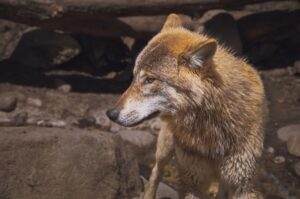
With your container established, you’re ready to actively invite your animal spirit’s presence. If you have a physical representation of the animal, hold it or gaze at it. If not, simply close your eyes and visualize the animal in vivid detail. Notice the texture of its fur or scales, the color of its eyes, the way it moves. If you’ve chosen a wolf, for example, imagine the silver-grey of its coat, the intensity of its amber gaze, the grace and power of its stride.
Speak directly to the spirit. You might say something like: “Wolf spirit, I welcome you. I recognize the strength and authenticity within you. I ask that you help me access my own voice and power. Show me what I need to understand about myself at this time.” Be specific about what quality or wisdom you’re seeking. This focused intention makes your ritual more potent than vague or general requests.
Now engage in a practice called “embodied visualization.” Imagine yourself becoming the animal. How does it feel to inhabit this body? What is your awareness like from this perspective? If you’re embodying an eagle, you might feel the vastness of vision, the freedom of flight, the clarity of seeing the entire landscape below. Spend five to ten minutes in this embodied state. You might sway, move your arms like wings, or simply sit still while your inner experience is vivid. Trust whatever naturally arises—this isn’t performance; it’s genuine imaginative engagement with the symbolic realm.
Many people receive insights during this phase—sudden knowing, imagery, emotional shifts, or even physical sensations. A person invoking the bear might suddenly feel an impulse to curl inward, feeling the protective solitude of a den. Someone working with the deer might experience a heightened sensitivity to subtle sounds and movements. Don’t judge or dismiss these experiences. They’re your psyche’s way of integrating the animal spirit’s qualities into your consciousness.
Receiving Messages and Recording Insights
After you’ve spent time in embodied connection with your animal spirit, transition into receptive listening. This is where your journal becomes essential. Open your eyes if they’ve been closed, and begin writing whatever comes to mind. Don’t edit or censor yourself—write quickly and without judgment. This practice, called automatic or stream-of-consciousness writing, bypasses your critical mind and allows deeper wisdom to surface onto the page.
You might ask specific questions and let the answers flow: “What do you want me to know right now?” “What quality of yours am I most needing to cultivate?” “What shadow aspect of your nature should I be aware of?” Write for at least ten to fifteen minutes, even if you feel like you’re making things up. Often, what we assume is imagination is actually intuition expressing itself in a symbolic form our rational mind can accept.
Pay attention to any recurring symbols, phrases, or images that appear in your writing. If you’re working with the snake and the words “shedding” and “renewal” keep appearing, this is significant. Your unconscious is emphasizing these concepts because they’re relevant to your current life situation. If you’re invoking the owl and find yourself writing about “seeing in darkness,” this too is a message tailored to you.
Don’t worry if profound insights don’t arrive immediately. Sometimes the most valuable messages emerge days later, when a moment in your daily life suddenly connects to your ritual experience. A conversation with a friend might echo something you wrote, or you might notice yourself naturally embodying the animal spirit’s qualities in a situation where you need them.
Closing Your Ritual and Integrating the Work
Properly closing your ritual is just as important as opening it, as it reorients you to ordinary time and anchors the work you’ve done into your everyday consciousness. Set down your journal and take three more deliberate breaths, similar to your opening breath work. Express gratitude—to the animal spirit, to the wisdom that emerged, to yourself for showing up for this practice. Gratitude completes an energetic cycle and creates a sense of closure.
If you’ve created a protective circle, consciously dissolve it by visualizing the light gradually fading or transforming back into the space around you. Some people imagine the light returning to the earth or to the sky. Others simply state, “My circle is open.” Blow out your candle intentionally, using this action to mark the transition from ritual space back to ordinary time.
Take a few minutes to ground yourself before returning to your normal activities. Drink some water, feel your feet on the floor, look around your space with fresh eyes. Jot down a few key insights from your journal on a sticky note and place it somewhere visible—on your bathroom mirror, your desk, or your car dashboard—so the animal spirit’s wisdom stays present in your conscious awareness throughout your week.
The most powerful part of any animal spirit ritual happens after you leave your ritual space. Watch for synchronicities—unexpected appearances of your animal spirit, whether you see it in nature, encounter it in a book or conversation, or notice it appearing repeatedly in your dreams. These synchronicities often deepen the message and confirm that you’re on the right track with integrating this wisdom into your life.
Developing a Consistent Practice and Deepening Your Connection
Like any meaningful practice, animal spirit rituals become increasingly powerful with consistency and repetition. Consider establishing a regular schedule—many practitioners work with a new animal spirit each full moon cycle, spending a full month deepening their connection before moving to another animal. Others choose a single animal to work with for an entire season, returning to that spirit as circumstances in their life evolve and deepen their understanding.
As your practice develops, you can incorporate additional elements. Create an altar dedicated to your animal spirit—a small designated area with a candle, your physical representation, stones, flowers, or any items that feel connected to this spirit. Return to your altar regularly throughout the week, even if just to light a candle and spend a few minutes in quiet reverence. This sustained attention keeps the ritual’s energy alive between formal practice sessions.
You might also experiment with different ritual formats. Some practitioners work with animal spirits through movement—dancing the qualities of the animal, perhaps to recorded music. Others create art as their ritual, painting or sculpting the animal while maintaining focused intention. Some sing, drum, or use other instruments. Your unique expression matters more than following any prescribed format.
Over time, you’ll develop a personal language and relationship with animal spirits. You’ll begin to notice your “core animals”—the ones you’re repeatedly drawn to and that consistently offer relevant guidance. Many experienced practitioners work with three to five primary animal allies throughout their lives, adding new ones occasionally as their circumstances and spiritual development evolve.
Animal spirit rituals ultimately serve as a practical technology for accessing the wisdom you already carry. By creating intentional structures for dialogue with these archetypal powers, you give yourself permission to know yourself more deeply, to access courage you didn’t realize you possessed, to tap into the creativity of the wild, and to live with greater authenticity and purpose. The animals have walked this earth far longer than humans—their spirits offer lessons written in the language of nature itself, waiting for you to remember what you’ve always known.
You Might Also Like
Decode the Message
What does your spirit animal carry? Animal symbolism across world cultures, mythology, and spiritual traditions — weekly.
No spam. Unsubscribe anytime.
