
🕐8 min read
In This Article
Spirit Animal Discovery Guide
Find your spirit animal — comprehensive quiz, meanings, meditation techniques, and totem interpretations.
- When Your Spirit Animal Doesn’t Feel Like “You”
- The Shadow-Work Teachers: Uncomfortable Animal Symbolism
- Behavioral Truths Behind the Symbolism
- Cultural Perspectives on Unexpected Guides
- Interpreting Dreams of Unfamiliar Animals
- A Meditation for Meeting Your Unlikely Guide
- Journal Prompts for Integrating Shadow Animal Encounters
- Frequently Asked Questions
You’ve always felt a kinship with the wolf—its fierce loyalty, its wild independence—so when a vulture circles overhead on your morning hike, you dismiss it. After all, what could this scavenger, this omen of death, possibly have to teach you? But dismissing an unexpected animal encounter as mere coincidence may mean missing one of the most profound invitations your spirit has ever offered. In traditions from Celtic to Lakota, unexpected animal guides don’t appear by accident; they arrive as messengers from the shadow realms, calling you toward the parts of yourself you’ve neglected, feared, or forgotten. These are not misfires in the cosmic switchboard—they are precise, challenging, and deeply necessary teachers.
6 min read
In This Article
- When Your Spirit Animal Doesn’t Feel Like “You”
- The Shadow-Work Teachers: Uncomfortable Animal Symbolism
- Behavioral Truths Behind the Symbolism
- Cultural Perspectives on Unexpected Guides
- Interpreting Dreams of Unfamiliar Animals
- A Meditation for Meeting Your Unlikely Guide
- Journal Prompts for Integrating Shadow Animal Encounters
- Frequently Asked Questions
Key Takeaways
- When Your Spirit Animal Doesn’t Feel Like “You”
- The Shadow-Work Teachers: Uncomfortable Animal Symbolism
- Behavioral Truths Behind the Symbolism
- Cultural Perspectives on Unexpected Guides
When Your Spirit Animal Doesn’t Feel Like “You”
It’s natural to hope for a spirit animal that mirrors your perceived strengths—the grace of a deer, the wisdom of an owl. But spiritual guidance rarely conforms to our ego’s preferences. In my own practice, I once worked with a client who identified strongly with the bear—grounded, protective, solitary. Yet for months, spiderwebs appeared everywhere she turned: in her garden, across her doorway, even woven into her dreams. She resisted, until we explored the spider’s symbolism across cultures: in Hindu tradition, the spider weaves the cosmic web of Maya (illusion); in many Native American teachings, it represents creativity and the interconnection of all life. Her resistance wasn’t about the spider—it was about confronting her own fear of entanglement, of vulnerability, of creating something new. The animals that unsettle us often guard the very lessons we most need to integrate.
Celtic Animal Lore: Guides from the Unseen World
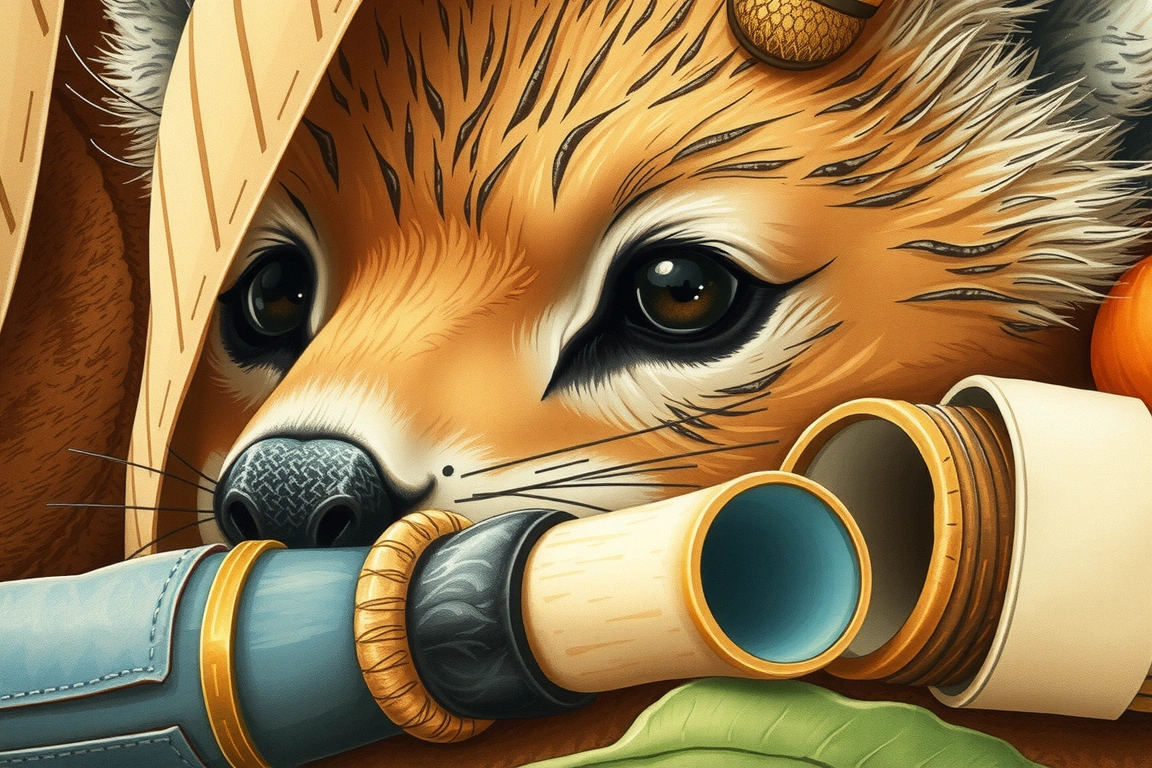
In Celtic tradition, animals were seen as mediators between the human world and the Otherworld. Encounters with unfamiliar wildlife—especially those considered “unclean” or ominous—were treated with deep reverence. The crow, for instance, was not merely a scavenger but a keeper of ancestral memory and a guide to the mysteries of transformation. Celtic shamans believed that if a non-native animal like the hedgehog (which appears in very few Celtic regions) crossed your path, it was a direct summons to look beyond your familiar territory, both geographically and spiritually. These were not casual meetings; they were considered arranged interventions by the universe.
These were not casual meetings; they were considered arranged interventions by the universe.
The Shadow-Work Teachers: Uncomfortable Animal Symbolism
Shadow work involves facing the disowned, denied, or hidden aspects of the self—and nothing brings those to the surface like an animal you’d rather not claim. Consider the hyena: often maligned as a cowardly scavenger, yet in Egyptian symbolism, it was sacred to the goddess Nephthys, guardian of the threshold between life and death. Hyenas exhibit remarkable social intelligence, with clans of up to 80 individuals operating in matriarchal structures where females dominate. If the hyena appears in your life, it might be asking you to examine where you shy away from your own power, or where you judge others (or yourself) for doing what is necessary to survive. The animals we reject often reflect the traits we’ve been taught to suppress.
Native American Teachings on Challenging Totems
Many Native American traditions, such as those of the Lakota and Ojibwe, hold that a totem animal chooses you—not the other way around—and it may not be the one you want. A person who sees themselves as gentle might be assigned the wolverine, an animal known for its fierce tenacity and ability to defend its territory against predators many times its size. The lesson isn’t to become aggressive, but to learn when to hold your ground and protect your energy. Respect is key here: these traditions emphasize that the animal is a relative offering a gift, even if that gift demands courage to accept.
Want to decode more?
Free weekly — no spam, unsubscribe anytime.
Behavioral Truths Behind the Symbolism
Understanding the real-life behavior of these animals can demystify their messages and ground spiritual insights in observable truth. Take the opossum, North America’s only marsupial, which often appears in suburban areas uninvited. To many, it’s an unwelcome pest. But opossums are immune to most snake venom and eat nearly 5,000 ticks per season, directly protecting their ecosystems. They “play dead” as a highly effective defense mechanism, slowing their heart rate by nearly 40% to evade predators. Spiritually, the opossum doesn’t ask you to “play dead,” but to consider where strategic retreat or non-reactivity might serve you. Its appearance suggests that what seems like weakness may actually be sophisticated survival wisdom.
Cultural Perspectives on Unexpected Guides
| Animal | Cultural Tradition | Unexpected Lesson |
|---|---|---|
| Vulture | Hindu (Jatayu) | Self-sacrifice, purification, seeing the bigger picture |
| Scorpion | Egyptian (Serket) | Protection through boundaries, healing through confrontation |
| Cockroach | Chinese Feng Shui | Resilience, adaptability, finding light in darkness |
| Bat | Celtic | Initiation, facing the inner shadow, rebirth |
Its appearance suggests that what seems like weakness may actually be sophisticated survival wisdom.
Interpreting Dreams of Unfamiliar Animals
Dreams are where the subconscious often introduces its teachers most vividly. A dream of a centipede—an animal not typically beloved—might stir unease. But in some Asian traditions, the centipede is a symbol of balanced aggression and protection; it moves with deliberate speed, each of its 30-354 legs (depending on species) working in harmony. Dreaming of a centipede could indicate that you are being called to coordinate multiple aspects of your life more effectively, or to defend your progress without apology. The key is to move beyond initial disgust or fear and ask: what function does this animal serve in nature? That usually points toward the spiritual medicine it offers.
A Meditation for Meeting Your Unlikely Guide
Find a quiet space where you won’t be disturbed. Light a Candles if it helps you focus. Close your eyes and take three deep breaths, feeling your body settle into the earth beneath you. Imagine yourself walking along a forest path at dusk. You hear a rustle—an animal steps out that you didn’t expect to see. It might be one you’ve feared or overlooked. Instead of turning away, you sit down. You ask, silently: What are you here to teach me? Wait. Listen. Does it show you an action? A memory? A feeling? Don’t force meaning—let the animal communicate in its own way. When you’re ready, thank it and slowly bring your awareness back to the room. Journal immediately after.
Journal Prompts for Integrating Shadow Animal Encounters
- What was my immediate emotional reaction to this animal? Where else in my life do I feel that same resistance?
- What does this animal do exceptionally well in its natural environment? How can I apply that skill to my current challenges?
- If this animal were a part of me, which part would it be? Am I willing to embrace that aspect?
Unexpected spirit animal encounters are not mistakes—they are some of the most precise spiritual diagnostics available to us. They reveal the map of our inner wilderness, pointing toward the territories we’ve avoided but must visit to become whole. The vulture asks you to release what no longer serves you. The spider invites you to weave a new narrative. The opossum reminds you that survival sometimes requires stillness. Your task is not to trade your beloved wolf for the vulture, but to expand your idea of what strength and guidance can look like. Welcome the teachers that arrive uninvited; they are often the ones you need most.
Deepen your practice, one ritual at a time
Join our circle for seasonal rituals, moon guides, and gentle prompts — sent with intention, never spam.
Frequently Asked Questions
Can your spirit animal change over time?
Yes, absolutely. While some traditions believe in a lifelong totem, many teach that spirit animals can come and go based on the lessons you need at different life stages. You might have one primary guide for several years, while others appear briefly during transitions or challenges. It’s common to work with multiple animal guides throughout your life.
What if I’m afraid of the animal that keeps appearing?
Fear is a natural response, especially with animals that carry cultural stigma (like snakes or spiders). Start by researching the animal’s real behavior and symbolic meanings across cultures—knowledge often dissolves fear. Then, in meditation, ask the animal to reveal its message gently. Sometimes, the fear itself is the lesson: what are you afraid of owning within yourself?
How do I know if it’s really a spirit guide and not just a coincidence?
Look for patterns: repeated sightings in a short time frame, vivid dreams, or a strong intuitive pull. Spirit animal encounters often carry an eerie sense of timing or significance—you’ll feel it in your gut. If you’re unsure, sit with the experience for a few days. Authentic guides tend to make their presence known persistently but without force.
You Might Also Like

Decode the Message
What does your spirit animal carry? Animal symbolism across world cultures, mythology, and spiritual traditions — weekly.
No spam. Unsubscribe anytime.
