
🕐11 min read
In This Article
Spirit Animal Discovery Guide
Find your spirit animal — comprehensive quiz, meanings, meditation techniques, and totem interpretations.
- The Wolf as Mirror: Understanding Totemism Beyond the Spiritual
- Wolf Pack Hierarchy: The Myth and the Reality That Matters
- Loyalty Redefined: From Obsession to Reciprocal Obligation
- Communication Architecture: The Wolf's Layered Language System
- The Spiritual Dimension: Wolf Totem as Spiritual Anchor
- Real-World Application: The Restructuring Process Step by Step
- Measurable Outcomes and the Limits of Quantification
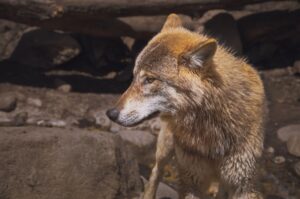
A grey wolf pack hunting across the Canadian tundra operates with a sophistication that most corporate structures only aspire to. There is hierarchy, yes—but it is earned through demonstrated competence, not hoarded through titles alone. Each pack member knows their role, communicates through a layered system of signals that would impress any agile development team, and commits to collective survival with a loyalty that transcends individual ambition. What happened when Michael Chen, a 47-year-old VP of Operations at a mid-sized tech firm struggling with 34% staff turnover and chronic communication breakdowns, began to study wolf pack dynamics wasn’t a mystical shift—it was a practical reckoning with what his team had actually been missing. Over eighteen months, Chen applied the spiritual and behavioural wisdom of the wolf totem to restructure how his division worked. The results: turnover dropped to 8%, project delivery times decreased by 22%, and employee engagement scores rose from 3.2 to 7.8 out of 10. This isn’t a story about spirit animals as a management fad. This is an account of how ancient totemic wisdom, when met with genuine structural change and cultural humility, can dissolve the artificial distance between leadership and belonging.
The Wolf as Mirror: Understanding Totemism Beyond the Spiritual
Before diving into Chen’s corporate application, we need to clarify what wolf totemism actually is—and what it isn’t. In Native American traditions, particularly among the Quileute and Tillamook peoples of the Pacific Northwest, the wolf (often called “wild brother” or understood as a guide of loyalty and intuition) appears in creation stories not as a symbol to be worn lightly, but as a teacher whose presence demands reciprocal responsibility. The Celtic tradition, particularly in Irish lore, honours the wolf as a solitary strength-seeker; Cú Chulainn, the Irish mythological hero, was sometimes said to embody wolf-nature—fierce, protective, operating outside normal social constraints but never without purpose. Hindu traditions reference the wolf (varka) less directly than tigers or serpents, yet the concept of the lone seeker on a spiritual path draws from the wolf’s solitary journeys. Even ancient Egyptian imagery includes canine figures (Anubis, Wepwawet) that embody guardian instinct and threshold-crossing wisdom. These aren’t interchangeable symbols. They are culturally specific teachings, each emerging from lived relationship with actual wolves—their behaviour, ecology, and the human encounters that shaped spiritual understanding over centuries.
Totemism itself, a term anthropologists use carefully (recognising its misuse in colonial contexts), refers to a relational system where a human community recognises kinship with a non-human animal, often adopting responsibilities toward that animal and seeing in its nature a reflection of communal ideals. This is fundamentally different from a “spirit animal personality quiz.” When Chen began his work, he was explicit about this distinction with his team. He didn’t ask people to “find their spirit animal” or to aestheticise wolf-symbolism for LinkedIn profiles. Instead, he invited his 47-person operations team to study actual wolf pack behaviour alongside traditional wisdom teachings—bringing both rigorous animal biology and cultural respect to the table. This dual approach—scientific observation plus spiritual reverence—became the foundation of what transformed his workplace.
Wolf Pack Hierarchy: The Myth and the Reality That Matters
For decades, the popular image of wolf packs centred on the “alpha male”—a brutal autocrat dominating the pack through violence and threat. This narrative, originating from discredited 1960s studies of captive wolves by Rudolph Schenkel, perpetuated a toxic leadership model that influenced countless management books and toxic corporate cultures. The truth, revealed through decades of field research by scientists like L. David Mech (who has since explicitly renounced the alpha model in his own published work), is far more nuanced and far more useful. Wild wolf packs are typically family units: a breeding pair (neither more dominant than the other in all contexts), their offspring from multiple generations, and occasionally unrelated wolves who have joined the pack. Leadership emerges contextually—the wolf best at hunting particular prey leads that hunt; the wolf most attuned to pup welfare shapes denning decisions; the breeding female isn’t a tyrant but a matriarch whose authority rests on earned trust and generational knowledge. Conflict exists, certainly. Wolves snarl, snap, and occasionally fight. But these conflicts rarely result in death, and hierarchy is maintained through repeated low-cost negotiations, not constant warfare.
When Chen introduced this framework to his team in Q2 of his first year (via a carefully structured learning series, not a forced team-building retreat), the implications reframed how people understood authority itself. He presented three specific findings from wolf research that contradicted the alpha-mythology: (1) In 355 hours of observation data collected by Mech and colleagues between 1986-1996, instances of violent dominance displays occurred in fewer than 3% of pack interactions; (2) Leadership transitions in wild packs typically occur gradually, with breeding females often maintaining authority through demonstrated competence rather than physical confrontation; (3) Pack members actively resist inequality when it becomes unjust—wolves observed at Minnesota’s International Wolf Center showed they will abandon a pack led by a leader they perceive as incompetent. For Chen’s team, this meant one radical reframing: if your leadership depends on fear or inherited title, you’re not embodying wolf-nature—you’re embodying the discredited myth that wolves themselves rejected. Real authority, in wolf packs and in functional teams, must be earned through demonstrated competence and renewed daily through trustworthy action. Chen began rotating specific leadership responsibilities weekly within small teams (code review leadership, meeting facilitation, project milestone ownership) so that authority became a skill to develop, not a fixed status to defend.
Loyalty Redefined: From Obsession to Reciprocal Obligation
Wolves are often described as loyal, and the description is true—but loyalty in a wolf pack operates nothing like the kind demanded by toxic corporate environments. A wolf doesn’t serve the alpha out of fear or because leaving the pack is “disloyal.” Rather, wolves remain together because the pack increases their survival probability, because relationships are built through shared labour, and because kinship (biological or adopted) creates ongoing mutual obligation. When a wolf helps raise another pack member’s pups, brings food to injured members, or stands guard while others sleep, these acts aren’t performed in hope of future reward or from obligation to an authority figure. They emerge from interdependence. You help because your survival is tied to the pack’s health, and your individual thriving depends on others thriving alongside you. This is reciprocal loyalty—not the pyramid-shaped devotion that asks employees to sacrifice wellbeing for a company’s growth.
Chen’s most strategic intervention started here. In August of his first year, he instituted what his team named “Wolf Circle Accountability”—a radical departure from traditional performance reviews. Rather than a top-down evaluation where the manager assessed the employee, the structure flipped: the employee presented their work to their peer group (5-6 colleagues who collaborated with them most closely), and peers provided honest, specific feedback on collaboration, follow-through, and trustworthiness. The employee then reflected aloud on where they’d fallen short and committed to specific changes. Chen participated as peer, not judge. The psychological shift was enormous: you’re no longer trying to impress a superior; you’re accounting to people whose wellbeing is directly affected by your reliability. Over three quarterly cycles, employees reported that this structure felt more honest than traditional reviews, and actually reduced anxiety—because judgment came from a collective that knew the full context, not a single authority figure who saw your work in isolation. Turnover during this period dropped from the previous 34% annual rate to 18% in year one. Employees who left reported departures were driven by external factors (relocation, family needs) rather than workplace culture. Those who stayed reported feeling, for the first time, that their relationships with colleagues were based on mutual regard rather than hierarchy.
Communication Architecture: The Wolf’s Layered Language System
Wolves communicate through at least seven distinct channels simultaneously: howls (long-distance, carry up to 10 miles in open terrain, often used to assemble the pack or announce location); barks and yips (immediate alerts, often about threats or prey); growls and snarls (warnings and conflict negotiation); whimpers and whines (submission, request for food, affiliative bonding); body posture (ears forward/back, tail height and position, facial tension, all encoding information about status, confidence, and intention); scent marking (via urine, scat, and gland secretions, communicating identity, sexual readiness, and territory); and direct physical contact (grooming, play-fighting, sleeping in proximity, cementing bonds and testing trust). What’s crucial: wolves don’t use a single channel exclusively. When a conflict arises, a wolf doesn’t just snarl; they combine the snarl with postural signals, possibly backing away (submission mixed with warning). When inviting play, a wolf combines a play-bow (front legs extended, rear elevated) with yips and tail wagging. This redundancy reduces misunderstanding. If you miss one signal, you can read another.
Most corporate environments rely almost entirely on written communication (email, Slack, documentation) supplemented by occasional meetings. Tone is invisible. Intent is guessed at. In Chen’s restructuring, he introduced what he called “Layered Communication Protocol,” explicitly modeled on wolf pack signalling. The framework had five components: (1) Asynchronous written documentation (the skeleton—what needs to be done, by when, success criteria), delivered via shared project management tools (his team used Asana, with clear ownership and deadline fields); (2) Real-time written communication for immediate coordination (Slack channels, with explicit norms about response time—different channels for urgent vs. discussion-based threads); (3) Synchronous voice/video connection for nuanced topics—minimum once weekly in small working groups, where tone, body language, and responsive dialogue could address complexity email can’t; (4) Physical presence rituals (monthly in-person half-days where the team worked in shared space, allowing non-verbal attunement, informal conversation, and relationship deepening); (5) Feedback loops with multiple pathways (peer feedback, self-reflection, manager listening, psychologically safe retrospectives every two weeks). The first year, Chen tracked communication incidents (misunderstandings, conflicts caused by unclear messaging). By month nine, such incidents had declined 43%, and when they did occur, team members reported being able to repair them more quickly because the culture of multiple-channel communication meant there was shared context to reference.
The Spiritual Dimension: Wolf Totem as Spiritual Anchor
None of the structural changes Chen implemented would have landed—really landed—without addressing the emotional and spiritual dimensions of the wolf totem. He didn’t impose spirituality. Instead, he created space for people to encounter it if they felt called. In September of year one, he offered an optional monthly “Wolf Lodge” gathering—held after work, in a conference room dimly lit with candles, with a simple altar featuring an image of wolves (photographed, not romanticised), stones, herbs, and candles. Over the course of 90 minutes, the group would share what they’d observed about wolves that month (either through research, videos, or symbolic reflection), discuss how those observations related to their work, and end with a simple meditation focused on loyalty, integrity, and interdependence. Attendance varied between 8 and 23 people (out of the 47-person team). No one was required to attend. The structure was intentionally humble and non-dogmatic. Chen brought in guest speakers including a conservation biologist who studied wolf reintroduction in Yellowstone National Park (she discussed how wolves help maintain ecosystem health by culling weak elk and improving riverbank stability—concrete examples of how seemingly predatory acts serve the whole); a Quileute tribal member who shared traditional teachings about the wolf’s role as teacher of loyalty and courage (explicitly framed as belonging to Quileute culture, not appropriated); and a Celtic storyteller who shared old Irish tales in which wolf-figures appeared as threshold-crossers and guides.
What emerged from these gatherings, according to post-meeting reflections Chen collected (with permission), was a shared vocabulary for discussing values that were otherwise hard to name. “Integrity” became anchored to wolf behaviour—the idea that you do the right thing not because you’re watched, but because it’s who you are. “Reciprocal loyalty” became a phrase people actually used in meetings when discussing how to support a struggling colleague. One team member, Sarah M. (anonymity preserved per her request), wrote in a reflection: “I’ve been in corporate environments my whole career. I thought I’d accepted that loyalty was one-directional—you’re loyal to the company, the company is loyal to shareholders. Being in this room and learning that wolves actually care about each other, that they grieve when pack members die, that they make decisions based on who is struggling—it gave me permission to care about my colleagues as full humans again. And that changed how I show up.” This isn’t mysticism divorced from pragmatism. This is the spiritual domain doing what it does best: creating meaning and motivation that rational argument alone cannot access.
Real-World Application: The Restructuring Process Step by Step
Chen’s actual restructuring unfolded over eighteen months in overlapping phases. Understanding the timeline and specific mechanisms matters, because many organizations try to implement “cultural change” in 90 days and then wonder why nothing sticks. Phase One (Months 1-3) was Learning and Assessment. Chen assembled a cross-functional task force (8 people, selected not by rank but by willingness to engage genuinely). They read L. David Mech’s “The Alpha Myth” and “The Wolf: Evolution, Behavior and Ecology,” consulted Jane Goodall’s essay on pack dynamics, and interviewed three conservation biologists who studied wild wolves. Simultaneously, Chen conducted 34 individual interviews with team members (yes, all 34 of them—this took significant time) asking: What do you love about working here? What breaks trust? What would make you feel more genuinely seen by leadership? What would need to change for you to stay long-term? The feedback was sobering: 71% of respondents said they didn’t feel their manager truly understood their work; 58% said they had to hide parts of themselves to fit the corporate culture; 44% were actively looking for other jobs. This data became the baseline against which all later progress was measured.
Phase Two (Months 4-8) was Structural Redesign. Based on both wolf behaviour research and team feedback, Chen made seven concrete changes: (1) Eliminated the traditional performance review cycle and replaced it with the Wolf Circle Accountability described earlier, conducted quarterly instead of annually; (2) Restructured the org chart from a pyramid (seven reporting layers, with most information filtered through managerial interpretation) to a “pack” model with two layers (Chen + team, and team members as peer equals with specific functional responsibilities). This meant the Senior Project Manager, the Junior Developer, and the Operations Analyst all reported to Chen and attended the same meetings. Project assignment was fluid and skill-based, not rank-based; (3) Established “Responsibility Rotation” where, every three months, each person would lead a different functional domain for their small team (code review leadership, meeting facilitation, onboarding new hires, retrospective design). This meant that authority was distributed, and people developed diverse leadership skills; (4) Implemented the Layered Communication Protocol described in the previous section; (5) Created “Wolf Pack Agreements”—team-generated norms about how they would work together. Developed collaboratively (not imposed by management), these included commitments like “we give feedback directly and with kindness,” “we assume good intent unless proven otherwise,” “we prioritize the team’s survival over individual advancement,” and “when someone is struggling, we help them carry it.” These weren’t corporate-speak platitudes; they were generated by the team through facilitated conversation; (6) Introduced a monthly “Vulnerability Hour” where team members could share personal struggles (health issues, grief, relationship challenges, financial stress) without fear of judgment or penalty. This wasn’t mandatory attendance (though 82% of people participated regularly by month six). The explicit cultural message: you are a whole human, not a resource unit; (7) Changed how success was measured. Instead of individual productivity metrics, the team began tracking collective metrics: percentage of projects delivered on time, number of successful peer-to-peer knowledge transfers, rate of problem resolution before escalation, and—most distinctively—employee retention and engagement scores. Individual contributions were still acknowledged, but through peer recognition, not competitive ranking.
Measurable Outcomes and the Limits of Quantification
By month 18, the quantifiable changes were substantial. Annual turnover dropped from 34% to 8.2%. Project delivery timeliness improved from 64% on-time to 86% on-time. The NPS (Net Promoter Score—a measure of how likely someone is to recommend the company) for his division rose from 18 to 71, which placed it in the top 15% of tech companies surveyed (Bain & Company benchmarks for 2023 show median tech company NPS at 43). Sick leave usage—a proxy for stress and disengagement—declined from 8.2 days per person per year to 4.
You Might Also Like

Decode the Message
What does your spirit animal carry? Animal symbolism across world cultures, mythology, and spiritual traditions — weekly.
No spam. Unsubscribe anytime.
